










West Bengal’s 2026 Assembly elections have once again proved that in Indian politics, a criminal case is no longer a liability — it is almost a résumé enhancement. According to a report by the Association for Democratic Reforms (ADR) and West Bengal Election Watch, the newly elected Assembly seems less like a legislature and more like a police station waiting room with VIP parking.
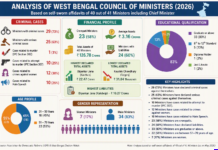
Out of 292 winning candidates analysed, as many as 190 legislators, or 65%, have declared criminal cases against themselves. Even more remarkable is that 170 MLAs, or 58%, have serious criminal cases pending against them. Five years ago, in the 2021 Assembly elections, these numbers stood at 49% and 39% respectively. Bengal, clearly, has shown impressive growth — just not in the sectors voters were probably expecting.
The numbers become more dramatic when compared with 2011. Back then, 34% of winning candidates had criminal cases and 24% faced serious charges. In 15 years, the state has nearly doubled its production of lawmakers with legal troubles. Bengal may have lost industries, but the political crime sector seems to be flourishing beautifully.
Among the winning candidates, 14 have declared cases related to murder, while 54 face charges linked to attempt to murder. Another 63 winners have declared cases involving crimes against women, including two candidates accused in rape-related cases. Apparently, “public servant” now comes with a side quest involving court appearances.
Party-wise figures add another layer of political comedy. The BJP led the charge with 152 out of its 206 winning candidates declaring criminal cases. Of these, 141 have serious charges against them. The AITC followed with 34 candidates facing criminal cases and 25 with serious allegations. Meanwhile, the Congress managed the impossible in modern politics — both its winning candidates reportedly have clean records. This alone may qualify as a miracle greater than winning seats in Bengal.
Money, of course, remains the other universal qualification. Of the 292 MLAs analysed, 158 are crorepatis. The total declared assets of all winning candidates stand at a jaw-dropping Rs 1,091 crore. The average assets per MLA rose from Rs 2.53 crore in 2021 to Rs 3.73 crore in 2026. Inflation may have hurt common people, but elected representatives seem to have discovered a separate economic policy inaccessible to ordinary citizens.
Among parties, the Congress topped the wealth chart with its two winning MLAs averaging assets of Rs 17.92 crore each. AITC candidates averaged Rs 5.36 crore, while BJP MLAs averaged Rs 2.97 crore. Clearly, ideological differences remain sharp, but across parties there is broad agreement that politics is among the safest investment options in the country.
The report also revealed that re-elected MLAs saw their average assets rise by 60% over five years — from Rs 2.39 crore in 2021 to Rs 3.83 crore in 2026. Mutual funds may be subject to market risks, but apparently legislative assembly membership offers excellent guaranteed returns.
Educational qualifications of MLAs also paint a colourful picture of democracy. While 185 winners are graduates or above, the Assembly also includes candidates ranging from doctorate holders to those who are merely literate. One winning candidate declared herself illiterate. Bengal’s lawmakers now represent the full spectrum of Indian education — from PhD thesis to signature practice.
The age profile suggests voters still trust experience, or at least familiarity. A majority of winning candidates, 184, fall in the 41-60 age bracket, while 59 are between 61 and 80 years old. Three victorious candidates are above 80, proving politics remains the only profession where retirement age is treated as a motivational suggestion.
Women continue to remain underrepresented. Only 37 women won this election, accounting for 13% of the Assembly, slightly lower than the 14% recorded in 2021. Evidently, parties remain committed to empowering women mainly through manifesto promises and social media posts.
In the end, the ADR report reads less like an election analysis and more like a casting list for a long-running political crime thriller. Bengal’s voters have once again demonstrated that in democracy, people get the government they choose — and occasionally, the ongoing court hearings that come with it.
Out of 292 winning candidates analysed, as many as 190 legislators, or 65%, have declared criminal cases against themselves. Even more remarkable is that 170 MLAs, or 58%, have serious criminal cases pending against them. Five years ago, in the 2021 Assembly elections, these numbers stood at 49% and 39% respectively. Bengal, clearly, has shown impressive growth — just not in the sectors voters were probably expecting.
The numbers become more dramatic when compared with 2011. Back then, 34% of winning candidates had criminal cases and 24% faced serious charges. In 15 years, the state has nearly doubled its production of lawmakers with legal troubles. Bengal may have lost industries, but the political crime sector seems to be flourishing beautifully.
Among the winning candidates, 14 have declared cases related to murder, while 54 face charges linked to attempt to murder. Another 63 winners have declared cases involving crimes against women, including two candidates accused in rape-related cases. Apparently, “public servant” now comes with a side quest involving court appearances.
Party-wise figures add another layer of political comedy. The BJP led the charge with 152 out of its 206 winning candidates declaring criminal cases. Of these, 141 have serious charges against them. The AITC followed with 34 candidates facing criminal cases and 25 with serious allegations. Meanwhile, the Congress managed the impossible in modern politics — both its winning candidates reportedly have clean records. This alone may qualify as a miracle greater than winning seats in Bengal.
Money, of course, remains the other universal qualification. Of the 292 MLAs analysed, 158 are crorepatis. The total declared assets of all winning candidates stand at a jaw-dropping Rs 1,091 crore. The average assets per MLA rose from Rs 2.53 crore in 2021 to Rs 3.73 crore in 2026. Inflation may have hurt common people, but elected representatives seem to have discovered a separate economic policy inaccessible to ordinary citizens.
Among parties, the Congress topped the wealth chart with its two winning MLAs averaging assets of Rs 17.92 crore each. AITC candidates averaged Rs 5.36 crore, while BJP MLAs averaged Rs 2.97 crore. Clearly, ideological differences remain sharp, but across parties there is broad agreement that politics is among the safest investment options in the country.
The report also revealed that re-elected MLAs saw their average assets rise by 60% over five years — from Rs 2.39 crore in 2021 to Rs 3.83 crore in 2026. Mutual funds may be subject to market risks, but apparently legislative assembly membership offers excellent guaranteed returns.
Educational qualifications of MLAs also paint a colourful picture of democracy. While 185 winners are graduates or above, the Assembly also includes candidates ranging from doctorate holders to those who are merely literate. One winning candidate declared herself illiterate. Bengal’s lawmakers now represent the full spectrum of Indian education — from PhD thesis to signature practice.
The age profile suggests voters still trust experience, or at least familiarity. A majority of winning candidates, 184, fall in the 41-60 age bracket, while 59 are between 61 and 80 years old. Three victorious candidates are above 80, proving politics remains the only profession where retirement age is treated as a motivational suggestion.
Women continue to remain underrepresented. Only 37 women won this election, accounting for 13% of the Assembly, slightly lower than the 14% recorded in 2021. Evidently, parties remain committed to empowering women mainly through manifesto promises and social media posts.
In the end, the ADR report reads less like an election analysis and more like a casting list for a long-running political crime thriller. Bengal’s voters have once again demonstrated that in democracy, people get the government they choose — and occasionally, the ongoing court hearings that come with it.