










A new analysis of regional political parties’ finances by Association od Democratic Reforms (ADR) paints a mixed picture of compliance, transparency and financial health, with sharp drops in income, rising expenditures and delayed disclosures raising serious concerns.
Out of all recognised regional parties, only 36 have submitted their audited accounts for the financial year 2024–25, while a large number either delayed their filings or failed to disclose them altogether. The deadline for submission was October 31, 2025, yet only 15 parties managed to comply on time.
Another 21 parties submitted their reports late, with delays ranging between two and 96 days. More troubling is the fact that audit reports of 31 parties — including major players like DMK, Shiv Sena and Nationalist Congress Party — were still unavailable even after a delay of 207 days as of May 27, 2026.
Despite the limited data, the financial trends emerging from the available reports are striking. The total income of the 36 regional parties stood at Rs 1,192.94 crore in 2024–25, with the Telugu Desam Party (TDP) leading the chart at Rs 228.31 crore. The All India Trinamool Congress (AITC) followed closely with Rs 219.35 crore, while YSR Congress reported Rs 140.38 crore. Together, the top five parties accounted for nearly 69% of the total income, underlining a high concentration of financial resources among a few players.
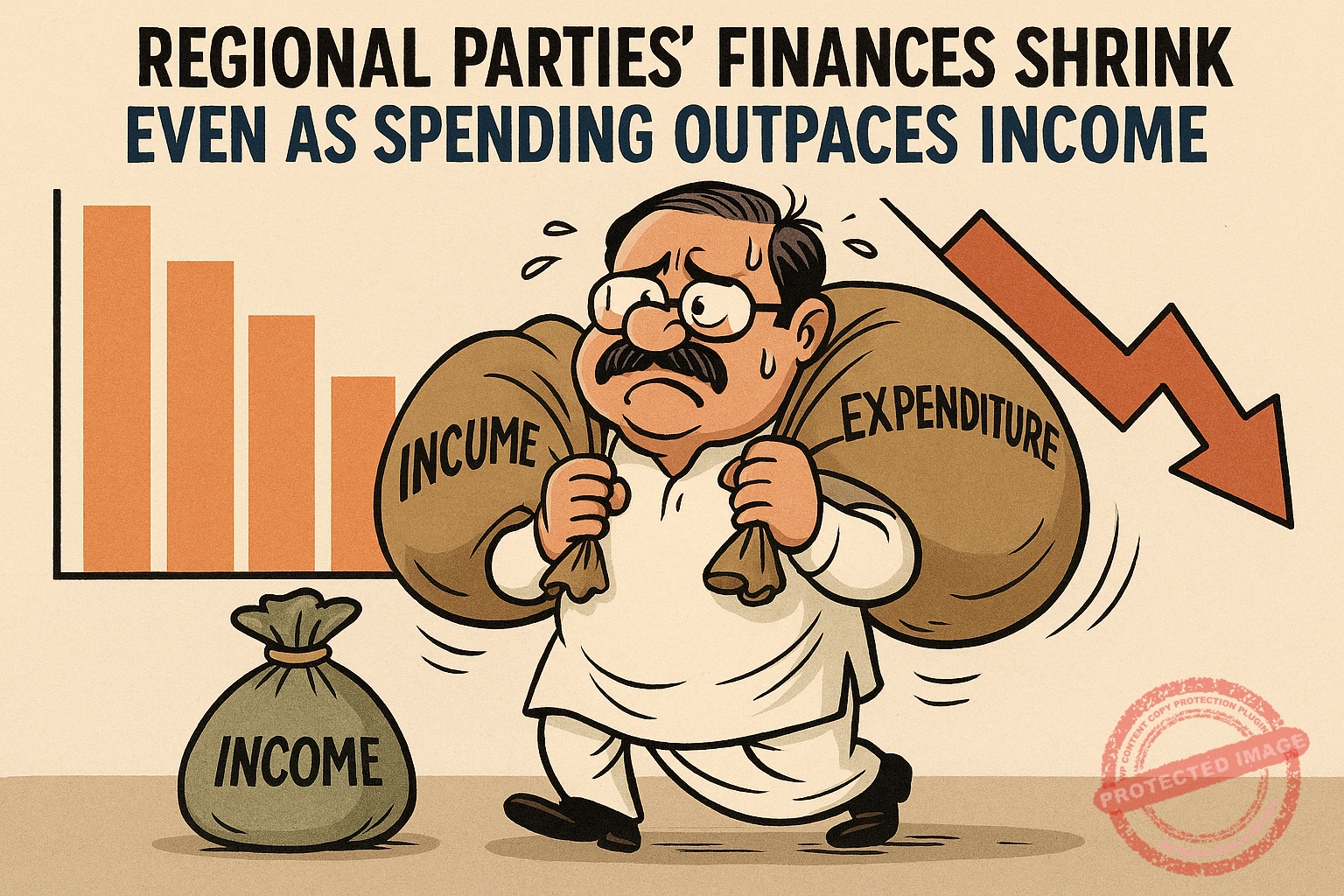
However, the overall income of these parties has taken a steep fall. It declined by over 51% compared to the previous financial year, dropping from Rs 2,463.17 crore in 2023–24. While 19 parties registered an increase in income, 17 reported a decline. AIADMK saw the highest growth, adding Rs 39.24 crore to its earnings, followed by Maharashtra Navnirman Sena (MNS) and Janasena Party.
On the spending front, the trend is equally concerning. Total expenditure by these parties rose to Rs 1,433.06 crore, exceeding their combined income. The top five parties alone accounted for over 77% of the total spending. YSR Congress emerged as the highest spender at Rs 340.20 crore, followed by BJD, AITC, BRS and SP. Notably, 21 of the 36 parties spent more than they earned during the year. YSR Congress stood out for spending 142% more than its income.
At the same time, 15 parties managed to retain a portion of their income as unspent funds. TDP led in this regard, holding back nearly Rs 167 crore, while MNS and AIADMK also reported significant savings.
Donations continue to remain the backbone of funding for regional parties. Voluntary contributions accounted for nearly 59% of total income, amounting to over Rs 702 crore. AITC received the highest donations, followed by YSR Congress and TDP. Interest income too formed a notable chunk, contributing more than 23% of earnings.
The patterns of expenditure reveal that most parties spent heavily on administrative and general expenses as well as election-related activities, indicating a continued focus on organisational maintenance and electoral competitiveness.
The report also flags serious issues with transparency and compliance. With dozens of parties failing to submit audit reports on time or at all, questions are being raised about regulatory enforcement. It recommends stricter rules by the Election Commission of India, including mandatory disclosure of complete donor details and penalties for incomplete filings. The suggestion to deny tax exemptions to parties that miss income tax deadlines also gains importance in this context.
Overall, the findings highlight a growing imbalance in the finances of regional parties — shrinking incomes, rising expenditures and weak compliance — pointing to the urgent need for greater accountability and tighter oversight in India’s political funding system.