










Indian politics, it seems, comes with its own balance sheet and police docket—and the Association for Democratic Reforms and National Election Watch have opened both. After examining the self‑sworn election affidavits of 30 current Chief Ministers from States and Union Territories (with Manipur presently under President’s Rule and therefore off duty), the picture that emerges is less a surprise and more a neatly tabulated reminder of how power, pedigree and past lives often travel together.
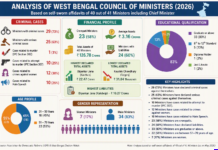
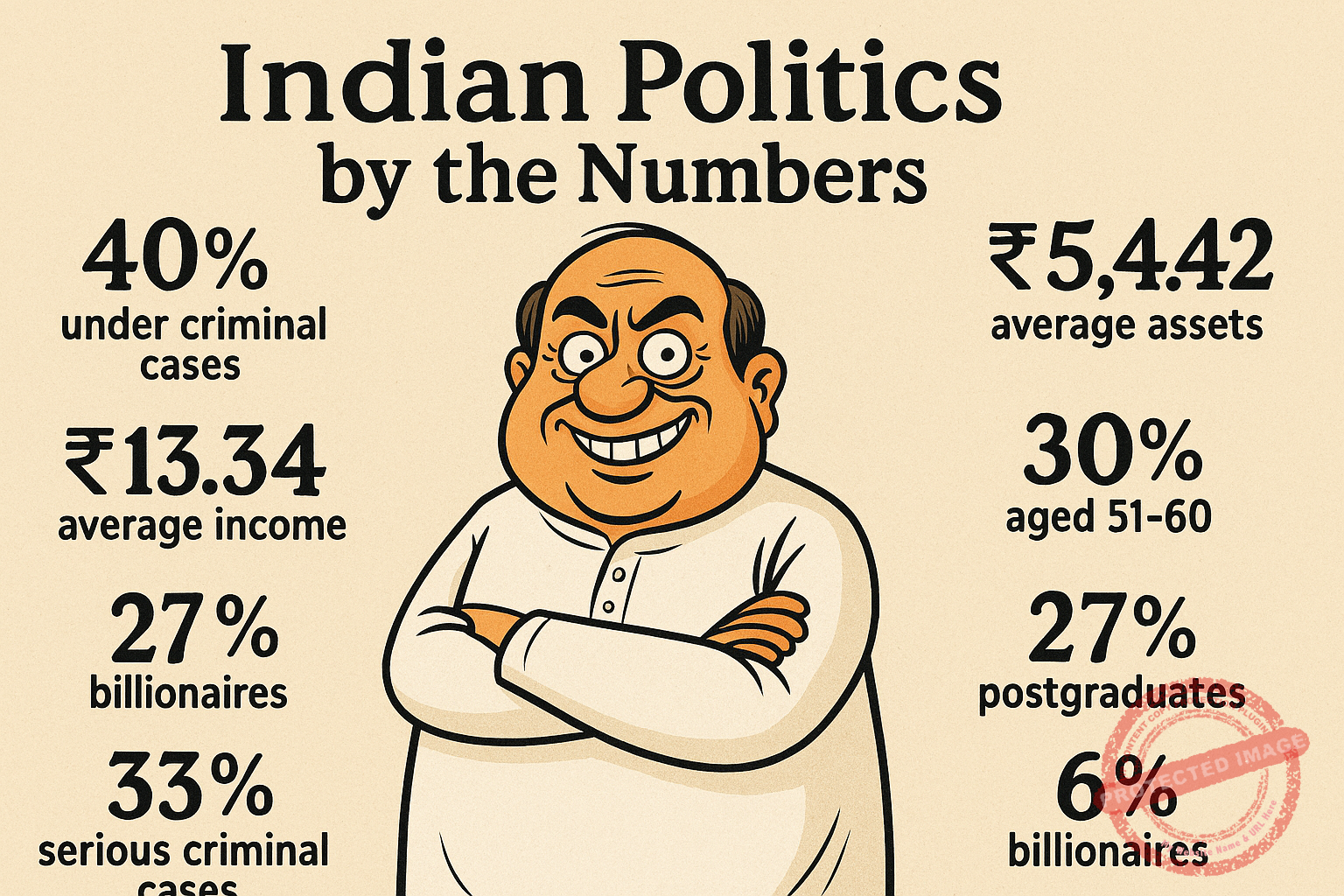
Out of these 30 Chief Ministers, 12 admit to having criminal cases against themselves, suggesting that for nearly two in five, brushes with the law have been a feature, not a footnote. A slightly smaller but still striking group of 10 Chief Ministers—one-third of the total—declare serious criminal cases, the kind that come with weighty legal phrases such as attempt to murder, kidnapping, bribery or criminal intimidation. Clearly, the path to the top has not always been free of legal speed breakers.
On the wealth front, leadership appears to be doing reasonably well. The average assets per Chief Minister stand at Rs. 54.42 crore, while together the 30 Chief Ministers control assets worth Rs. 1,632 crore. Two of them comfortably qualify as billionaires, proving that public service and private prosperity are not necessarily strangers. Liabilities also make an appearance: 11 Chief Ministers admit to debts of Rs. 1 crore or more. Interestingly, despite these impressive asset figures, the average self‑declared annual income of a Chief Minister is a modest Rs. 13.34 lakh—an amount that sits somewhat shyly beside those crores.
Representation, however, remains selective. Of the 30 Chief Ministers analysed, only two are women, meaning power corridors are still overwhelmingly male. Educational qualifications show more variety. Two Chief Ministers hold doctorate degrees, eight are postgraduates, and six are graduate professionals. Nine are simple graduates, three have studied up to Class 12, one up to Class 10, and one holds a diploma—an assortment that suggests there is more than one academic route to the chief minister’s chair.
Age-wise, experience dominates. The largest group—12 Chief Ministers—falls in the 51–60 years bracket. Eight are between 41 and 50 years old, four are in their 60s, and six are in the 71–80 age group, making governance as much a story of seasoned hands as youthful ambition.
Taken together, the data reads like a civic report card with footnotes—part democratic mandate, part personal history. It does not pass judgement; it simply presents the numbers. What citizens make of those numbers, of course, is where democracy quietly waits for its next exam.