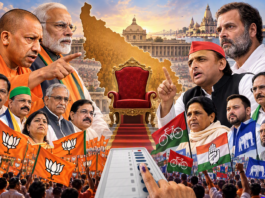
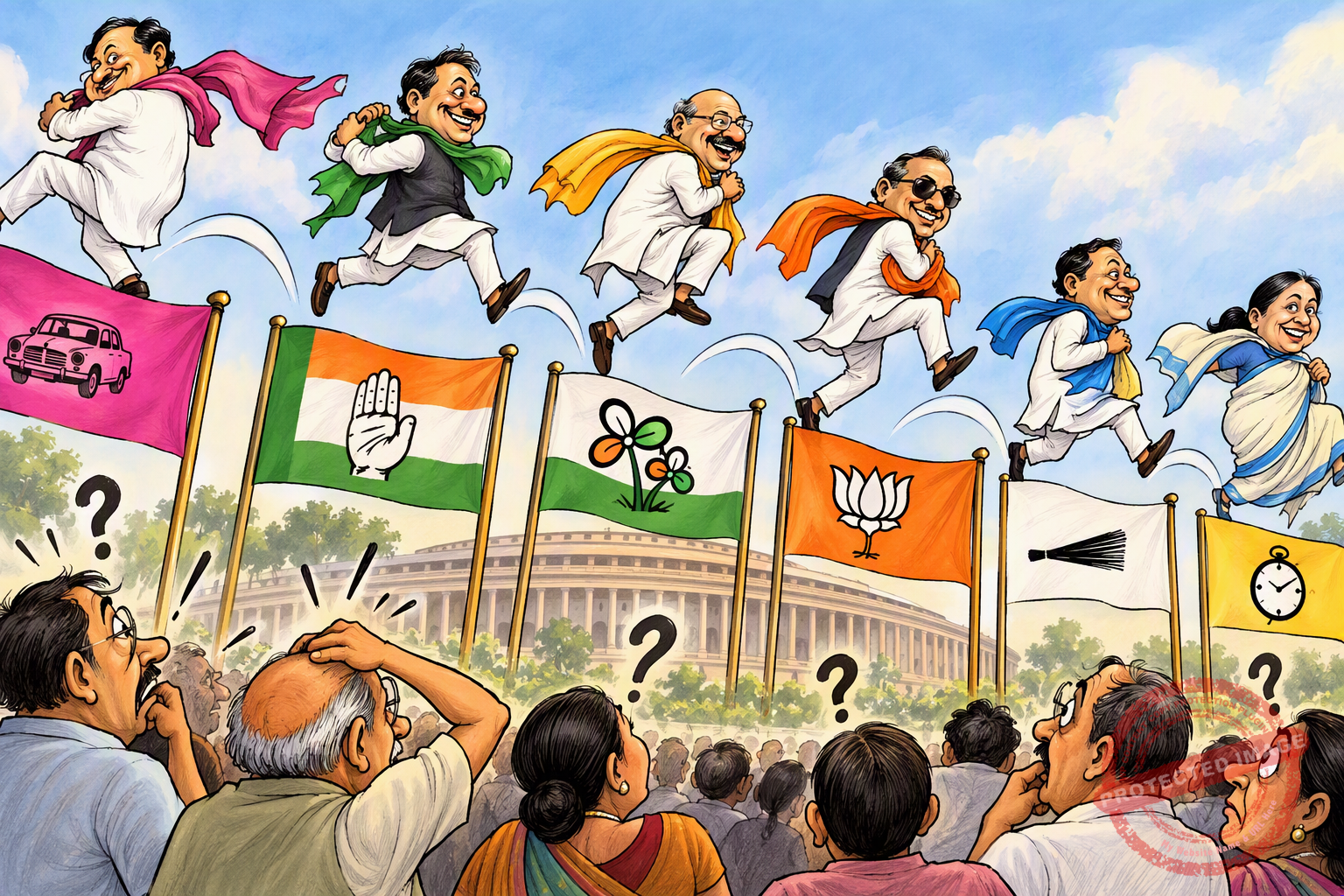
The voters may choose their representatives, but the representatives, it seems, sometimes reserve the right to choose their party later.
An analysis by the Association for Democratic Reforms (ADR) and National Election Watch has found that 111 sitting MPs and MLAs switched political parties after being elected to the current Lok Sabha, Rajya Sabha and State Assemblies. The study covers elections and by-elections held between 2022 and 2026.
Of the 111 legislators who crossed political lines, 26 were Lok Sabha MPs, seven were Rajya Sabha MPs and 78 were MLAs. Such switches were recorded across 17 States and Union Territories.
Nagaland topped the party-hopping chart with 32 legislators, accounting for 29% of the total, followed by West Bengal with 20, or 18%.
Among the parties from which legislators moved out, NDPP accounted for the maximum 25, followed by AITC with 20 and Congress with 19. BRS saw nine representatives shift allegiance, while AAP and NCP accounted for seven each. Shiv Sena (UBT) had six, JD(U) five and NPP four.
Together, NDPP, AITC and Congress accounted for 64 of the 111 switches, or 58% of the total.
And where did the political travelers find their new homes?
According to the analysis, NPF emerged as the biggest recipient with 32 legislators, followed by BJP with 29 and the Nationalist Citizens Party of India with 20. Congress received nine, Shiv Sena eight, NPP six and PPA four.
Together, the top three recipient parties accounted for 81 of the 111 legislators, or 73%.
ADR mentioned in its report that such defections raise fundamental questions about political ethics and respect for the voters’ mandate. In its assessment, the old “Aaya Ram, Gaya Ram” phenomenon remains alive and well, fueled by factors ranging from the lure of power and office to weak political institutions and delays in deciding disqualification proceedings.
The report also highlighted the political upheaval in West Bengal following the 2026 Assembly elections. It said AITC, after being pushed into opposition, witnessed a major internal split, while 20 of its Lok Sabha MPs merged with the Nationalist Citizens Party of India and extended support to the NDA. ADR cited such developments as examples of how electoral mandates can be reshaped after the votes have already been counted.
Its message is sharp: voters may elect a candidate carrying one party flag, but there is no guarantee the same flag will survive the full journey.
ADR seeks tighter anti-defection rules
To put some brakes on the political revolving door, ADR has recommended major electoral and political reforms.
It wants the Tenth Schedule of the Constitution strengthened, including tougher restrictions on legislators who defect or resign to change parties. A disqualified turncoat, it suggests, should not be allowed to return to public office through routes such as the Rajya Sabha, Legislative Councils or government appointments until securing a fresh mandate in a general election.
ADR has also called for a six-month statutory deadline for deciding disqualification petitions, addressing concerns over cases remaining unresolved for long periods.
Another major recommendation is to bring political parties under the Right to Information Act, along with comprehensive legislation regulating their functioning, accounts, internal elections, registration and de-registration, and organizational transparency.
It also wants greater inner-party democracy, including transparent ticket distribution, elections to party posts and stronger financial accountability.
Candidates, ADR recommends, should be announced three months before elections and those changing parties should publicly disclose their reasons for doing so.
The organization has sought stringent scrutiny of the assets of defecting MPs and MLAs and their immediate family members, particularly where an unusual increase in wealth is detected after a political switch.
Cases involving legislators should also be fast-tracked, while elected representatives should submit annual constituency reports detailing their achievements and plans.
Among wider electoral reforms, ADR has backed a system under which a candidate would need more than 50% of votes cast to win, with a runoff between the top two contenders if nobody crosses the threshold.
It has also recommended that candidates should not be allowed to contest the same election from more than one constituency.
In short, ADR wants stronger laws, faster decisions and greater transparency so that an election remains a mandate for the full term, rather than merely the opening round of a political transfer season.