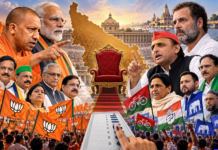











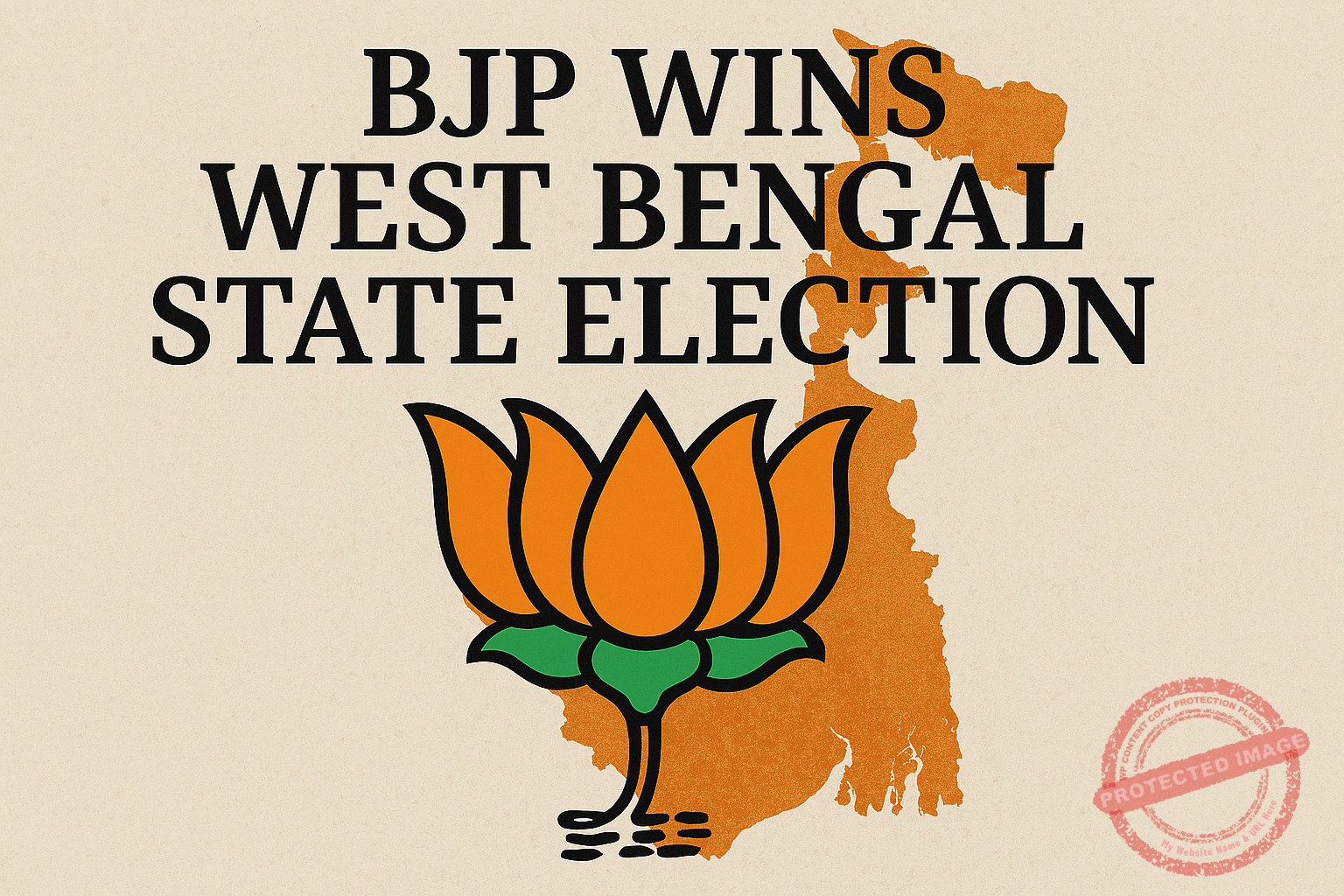
West Bengal had long remained outside the arc of Narendra Modi’s political expansion. Even as the Bharatiya Janata Party consolidated power across the Hindi heartland and extended its reach into western and north‑eastern India, the state held firm. Shaped by a strong sense of cultural distinctiveness and a tradition of combative politics, Bengal resisted incorporation into the BJP’s electoral map for over a decade. That resistance made the latest election unusually consequential. With more than 100 million voters, a population exceeding that of Germany, the contest carried the weight of a national political test rather than that of a routine state election. The BJP’s victory on Monday therefore represents a decisive moment, closing a long‑standing regional gap in the party’s eastern strategy and ending the rule of a government that had appeared structurally entrenched.
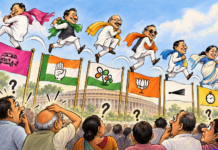
The scale of change was mirrored elsewhere in the country. Southern India witnessed sweeping political realignments, with Tamil Nadu seeing the collapse of the DMK government under MK Stalin and the emergence of actor‑politician Vijay’s TVK as a governing force, signalling a renewed phase of personality‑driven politics. Kerala, too, registered a sharp break with continuity as the Congress‑led United Democratic Front defeated the Left Democratic Front, bringing an end to the last Communist‑led government in India.
Assam stood apart, where the BJP overcame broader anti‑incumbent sentiment to retain power, while the party and its allies also maintained control of Puducherry. Among these outcomes, however, Bengal carried the greatest national implication.
For nearly fifty years, West Bengal politics had been defined by continuity rather than volatility. The Left Front governed uninterrupted for 34 years before being displaced by Mamata Banerjee’s Trinamool Congress, which then retained power for 15.
For nearly fifty years, West Bengal politics had been defined by continuity rather than volatility. The Left Front governed uninterrupted for 34 years before being displaced by Mamata Banerjee’s Trinamool Congress, which then retained power for 15.
Scholars often described the state’s political system as one that favoured long‑ruling, dominant parties. Against this backdrop, the BJP’s emergence as the ruling force was not a sudden electoral shock but the culmination of sustained, incremental gains over more than a decade. Unlike its swift rise in Tripura or its earlier breakthrough in Assam, progress in Bengal followed a slower trajectory marked by repeated electoral contests and steady vote consolidation.
The outcome is especially notable given the BJP’s relatively limited grassroots organisation compared with the Trinamool Congress. Banerjee’s party continued to possess a deeper booth‑level network and the advantage of an established leadership figure with strong popular recognition. Even so, the BJP succeeded in converting its vote share into a winning coalition, navigating an environment characterised by intense political competition, allegations of intimidation, and the resilience of a historically dominant regional party.
For years, the Trinamool Congress had constructed a broad social base that cut across religious and regional lines, with women playing a central role in sustaining its electoral dominance. Welfare programmes targeted at women and efforts to expand female political participation translated into consistently higher support among women than men, as reflected in post‑poll studies following the 2021 election. In the most recent contest, however, the BJP directly challenged this foundation by placing welfare expansion and cash‑transfer commitments at the centre of its campaign. In doing so, it altered the terms of competition and reshaped the political balance that had defined West Bengal for more than a decade.
The outcome is especially notable given the BJP’s relatively limited grassroots organisation compared with the Trinamool Congress. Banerjee’s party continued to possess a deeper booth‑level network and the advantage of an established leadership figure with strong popular recognition. Even so, the BJP succeeded in converting its vote share into a winning coalition, navigating an environment characterised by intense political competition, allegations of intimidation, and the resilience of a historically dominant regional party.
For years, the Trinamool Congress had constructed a broad social base that cut across religious and regional lines, with women playing a central role in sustaining its electoral dominance. Welfare programmes targeted at women and efforts to expand female political participation translated into consistently higher support among women than men, as reflected in post‑poll studies following the 2021 election. In the most recent contest, however, the BJP directly challenged this foundation by placing welfare expansion and cash‑transfer commitments at the centre of its campaign. In doing so, it altered the terms of competition and reshaped the political balance that had defined West Bengal for more than a decade.