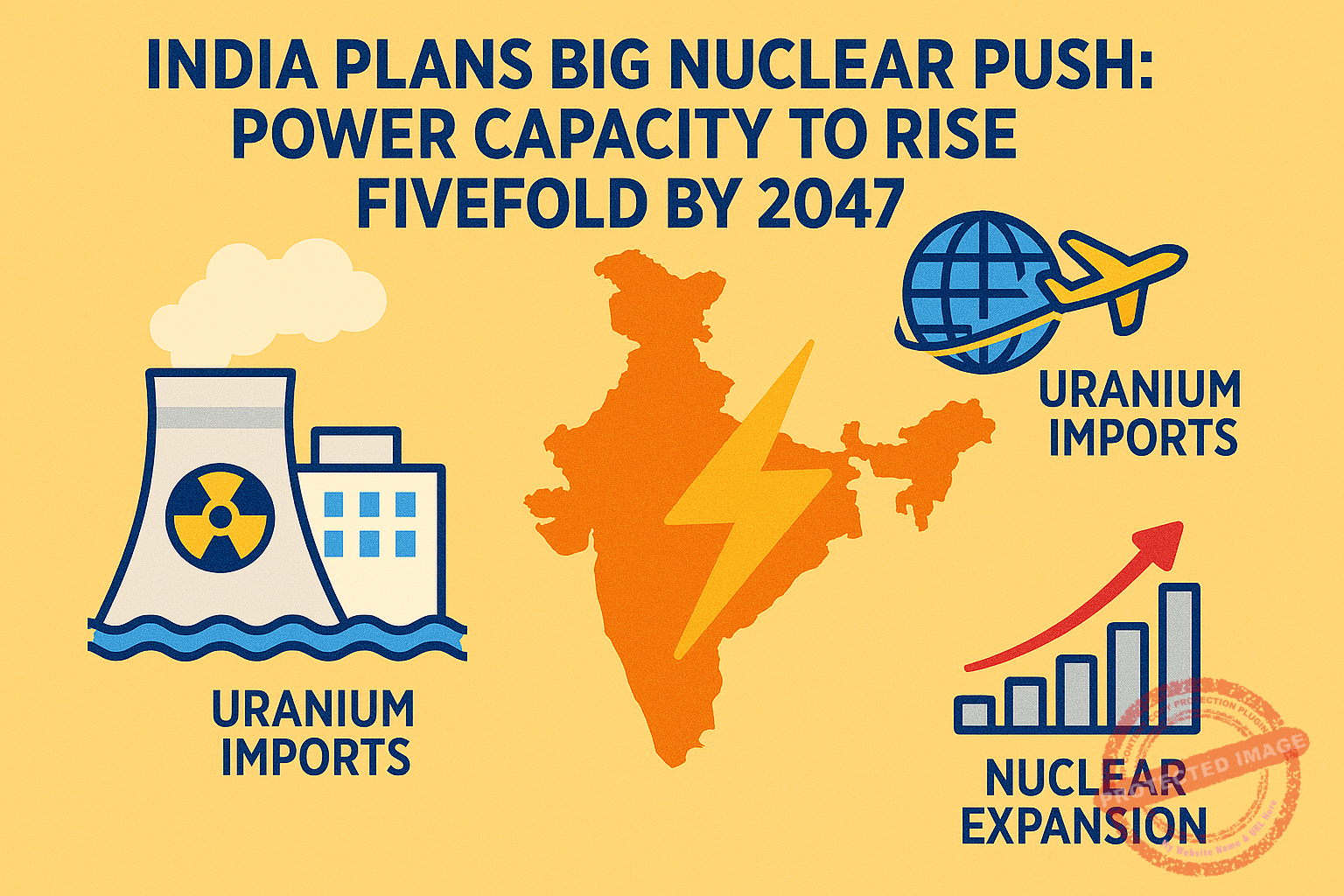











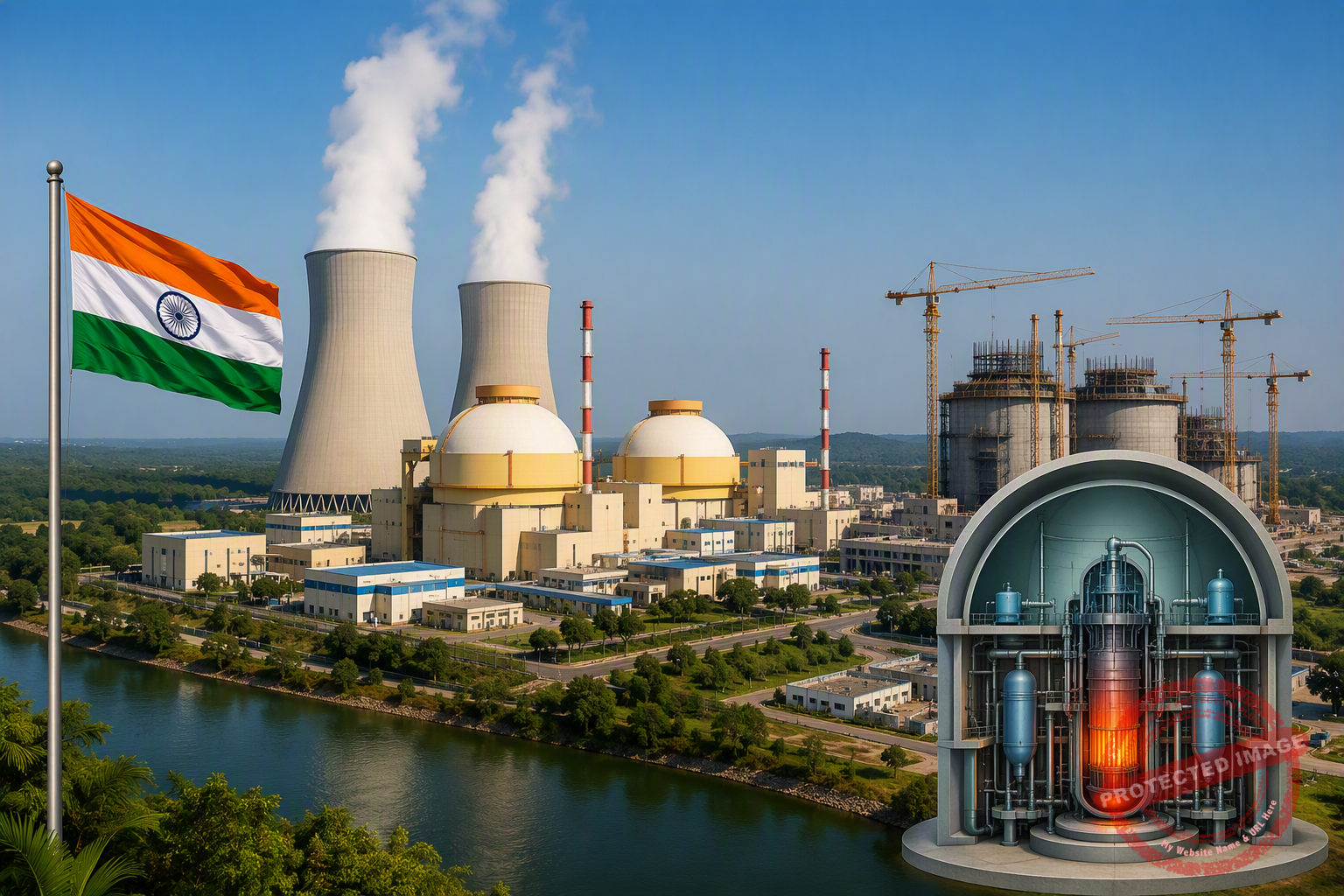
The Government of India has outlined an ambitious roadmap to significantly expand the country’s nuclear power generation capacity, with Karnataka continuing to play a key role in the programme through the Kaiga nuclear power station.
At present, four units of the Kaiga Nuclear Power Plant, namely Kaiga-1 to Kaiga-4 (4 × 220 MW), are operational in Karnataka. Two additional units, Kaiga-5 and Kaiga-6 (2 × 700 MW), are currently under construction.
India’s installed nuclear power capacity presently stands at 8,780 MW, generated through 24 operational nuclear power reactors across the country. Nuclear energy contributed 3.1 per cent of the country’s total electricity generation during 2025-26.
The government expects the nation’s nuclear power capacity to increase substantially to about 22 GW by 2031-32 through the progressive completion of projects that are under construction, commissioning, or various pre-project stages.
Emphasizing the importance of safety, the government said nuclear power plants in the country are developed and operated under stringent regulatory mechanisms. Safety considerations are incorporated at every stage, including siting, design, construction, commissioning and operation.
Plants are designed with redundancy, diversity and fail-safe features, following an overlapping “defence-in-depth” approach in accordance with the codes and guidelines of the Atomic Energy Regulatory Board (AERB). Operations are conducted by highly qualified and licensed personnel, while safety performance is subject to continuous monitoring and review by both plant operators and the AERB.
The government’s roadmap for nuclear expansion includes a near-term target of about 22,380 MW by 2031-32, supported by approximately 13,600 MW of capacity currently under construction or planning. Looking further ahead, India has set an ambitious long-term target of achieving 100 GW of nuclear power capacity by 2047 under the Nuclear Energy Mission for Viksit Bharat, announced in the Union Budget 2025-26.
The expansion strategy will rely on a mix of large-capacity nuclear reactors and indigenously developed Small Modular Reactors (SMRs). Additionally, the SHANTI Act, 2025, has opened the sector to licensed participation by private Indian companies and joint ventures, providing further momentum to the country’s nuclear energy ambitions.
The planned expansion is expected to strengthen India’s clean energy portfolio, enhance energy security and support the country’s long-term decarbonization goals.