










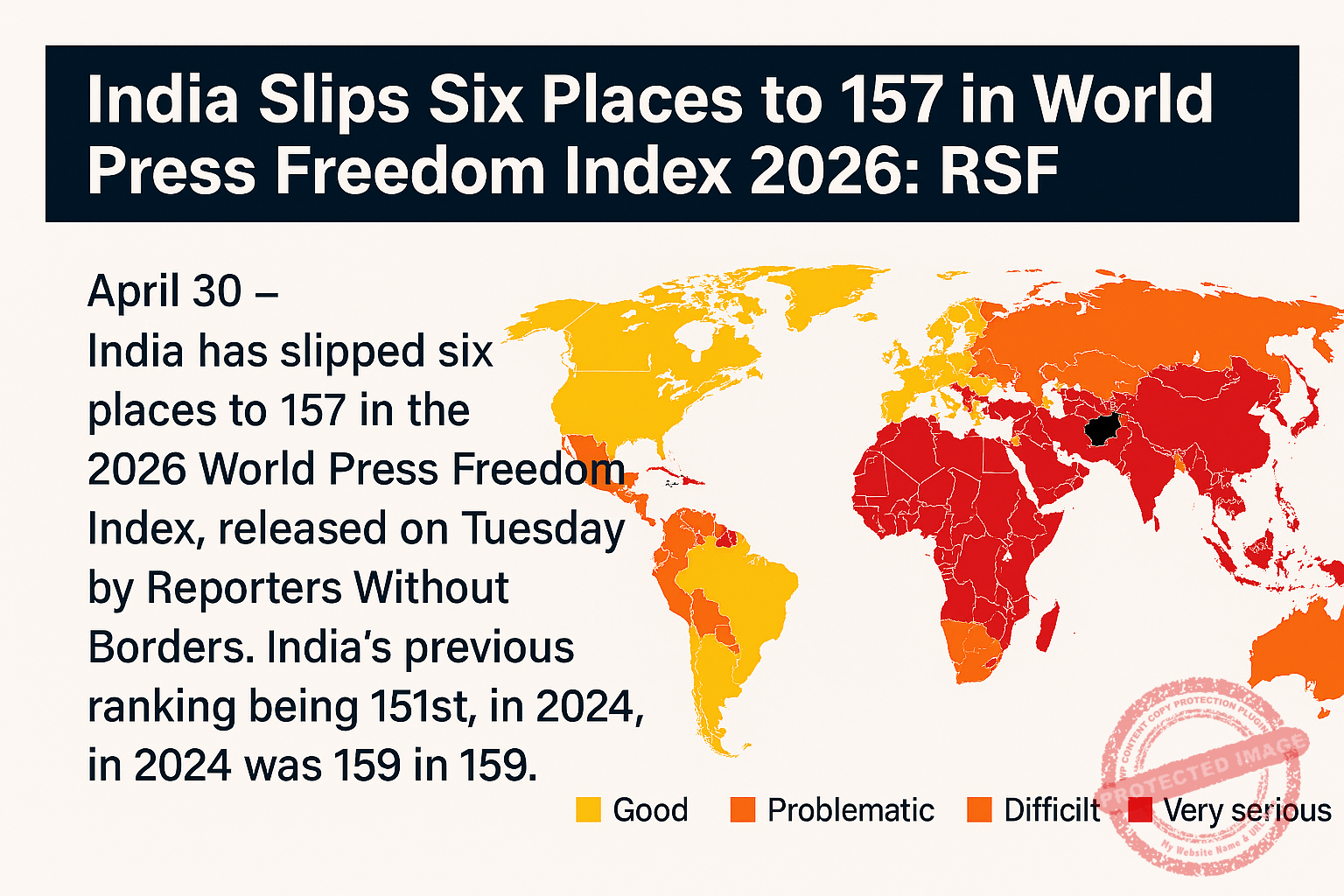
In the 2025 index, India was ranked 151, while in 2024 it stood at 159.
RSF said the average global press freedom score has dropped to its lowest level in 25 years, and for the first time since the index was launched, more than half of the world’s countries are now classified as having “difficult” or “very serious” conditions for journalism.
At the top of the index are Norway, the Netherlands, Estonia, Denmark and Sweden, while the lowest‑ranked countries are Eritrea, North Korea, China (178), Iran and Saudi Arabia.
Widespread Global Decline
The watchdog noted that 100 out of 180 countries recorded a decline in their press freedom scores over the past year. The sharpest deterioration was seen in the legal indicator, signalling what RSF described as the increasing criminalisation of journalism worldwide.
In the United States, press freedom fell by seven places, while several Latin American countries continued to slide amid rising violence and repression against journalists.
India Below Most Neighbours
India’s ranking places it below nearly all of its South Asian neighbours. Pakistan is ranked 153rd, Bhutan 150th, Bangladesh 152nd, Sri Lanka 134th, and Nepal 87th. Among neighbouring countries, only China, ranked 178th, fares worse.
India is also ranked below Palestine, which RSF notes despite the ongoing Israeli military campaign there.
“Unofficial State of Emergency” for Media
In its country assessment, RSF directly linked India’s press freedom crisis to the political climate under Prime Minister Narendra Modi and his party.
“With a rise in violence against journalists, highly concentrated media ownership, and outlets with increasingly overt political alignment, press freedom is in crisis in ‘the world’s largest democracy,’” RSF said.
The watchdog described the media environment as having fallen into an “unofficial state of emergency” since 2014, marked by close ties between the ruling Bharatiya Janata Party (BJP) and major corporate media groups.
RSF cited the growing dominance of business tycoons close to the prime minister, noting that Mukesh Ambani’s Reliance Industries now owns more than 70 media outlets, while Gautam Adani’s acquisition of NDTV in 2022 was seen as signalling the end of pluralism in mainstream television news.
“Godi Media” and Political Pressure
The report referred to the rise of “godi media”, a colloquial term suggesting media outlets seen as overly deferential to the government.
RSF said Prime Minister Modi does not hold press conferences, grants interviews primarily to journalists and influencers who portray him favourably, and is openly critical of dissenting media.
Journalists critical of the government, the report said, are frequently targeted by online harassment campaigns, particularly by BJP‑aligned social media networks.
Laws, Advertising and Financial Pressure
RSF noted the continued misuse of colonial‑era laws such as sedition and criminal defamation, as well as the increasing application of anti‑terror legislation against journalists.
Because Indian media depend heavily on advertising revenue — much of it from government sources — both central and state governments wield significant leverage over editorial content, the report found.
It also pointed out that billions of dollars in public funds have been spent on government advertising during the Modi era.
Lack of Diversity and Rising Violence
The report highlighted the lack of diversity in Indian newsrooms, especially at senior levels, which it said remain dominated by upper‑caste Hindu men.
Women make up less than 15% of guests on prime‑time television debates, RSF noted. Hindu nationalist ideology, it added, has become increasingly dominant, shaping political discourse and marginalising minority and dissenting voices.
India was also described as one of the world’s most dangerous countries for journalists, with two to three reporters killed each year because of their work.
Journalists — particularly women, environmental reporters, and those covering Kashmir — face ongoing threats including arbitrary arrests, prolonged detention, physical attacks, and coordinated online hate campaigns, RSF said.