In one of the most expansive health sector outlays to date, Union Finance and Corporate Affairs Minister Nirmala Sitharaman on Monday unveiled a sharply enhanced healthcare Budget for 2026–27, signalling a decisive shift toward universal health coverage, stronger infrastructure and future‑ready medical research. Presenting the Union Budget in Parliament—her first prepared at the newly inaugurated Kartavya Bhawan—Sitharaman said the government remains committed to building a “resilient, inclusive and modern health ecosystem” as part of India’s march toward Viksit Bharat@2047.
Health Budget Crosses Rs 1 Lakh Crore for the First Time
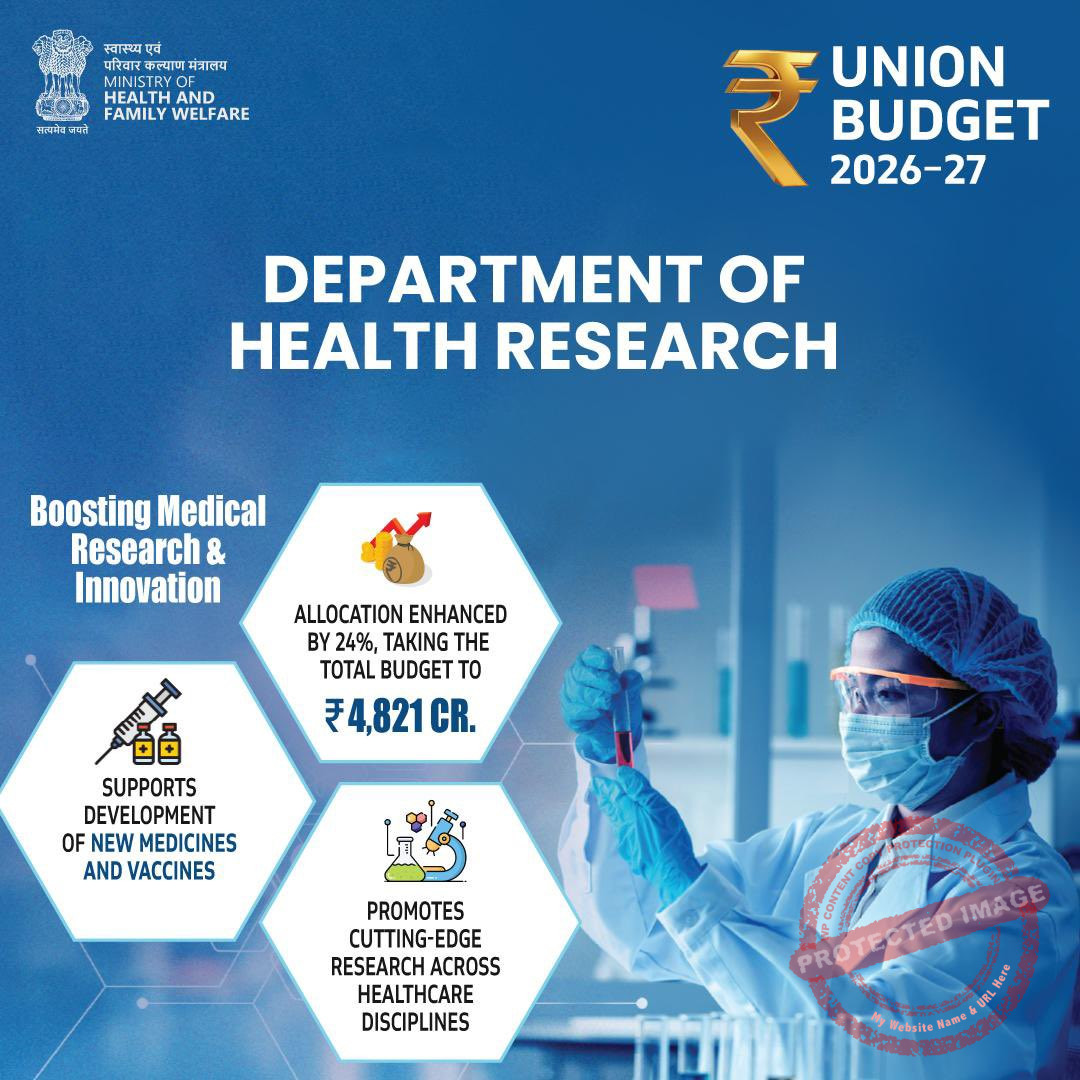
The Ministry of Health & Family Welfare (MoHFW) has been allocated Rs 1,06,530.42 crore, reflecting a 10% increase over the Revised Estimates of FY 2025–26. This marks a dramatic 194% rise compared to FY 2014–15—a cumulative surge of over Rs 70,000 crore. The Department of Health Research (DHR) receives Rs 4,821.21 crore, strengthening India’s biomedical research and innovation capacity.
Scheme allocations have seen a robust jump of Rs 6,175.96 crore (10.78%), while non-scheme expenditure has risen by Rs 2,500.96 crore (6.32%), underscoring the government’s twin focus on healthcare access and institutional strengthening.
Higher Outlays for Flagship Programmes
The health insurance scheme PM-JAY receives Rs 9,500 crore, up 5.56% over last year, with the government aiming to expand beneficiary coverage and strengthen empanelled hospital networks. The National Health Mission (NHM)—the backbone of primary healthcare delivery—has been allocated Rs 39,390 crore, marking a 6.17% rise.
A major boost has been given to the Ayushman Bharat Health Infrastructure Mission (PM-ABHIM), which receives Rs 4,770 crore, a significant 67.66% increase. The funds will support critical care blocks, public health labs, district hospitals and diagnostic infrastructure.
Strengthening AIIMS, Medical Colleges and Super-Specialty Care
Sitharaman announced major infrastructural and academic upgrades across India’s top medical institutions. The allocation for PMSSY and new AIIMS stands at Rs 11,307 crore, supporting construction, expansion and operationalisation of AIIMS campuses nationwide. Currently, 18 of 22 AIIMS are fully functional, with 12 operationalised since 2014.
The Budget proposes a substantial expansion of MBBS, PG, super-specialty and nursing seats, along with new super-specialty blocks, cancer centres, transplant units, robotic surgery facilities and AI-enabled diagnostic hubs.
The flagship HRH & Medical Education component has been raised to Rs 1,725 crore, enhancing training, teaching and workforce augmentation.
Big Push for Allied Health, Geriatric Care and Skill Development
Recognising India’s ageing population and the rising burden of non‑communicable diseases, the government has announced a Rs 980 crore, three-year plan to expand allied health education. Ten specialised Allied Health Professional Institutes will be developed to produce one lakh trained professionals in five years. A parallel programme will train 1.5 lakh geriatric caregivers, addressing India’s rapidly growing elderly care needs.
Sharp Rise in Public Health and Disease Control Funding
The National AIDS & STD Control Programme receives a major jump to Rs 3,477 crore—up 30.64%—including Rs 275 crore for blood transfusion services. This will strengthen testing, treatment, safe blood availability and surveillance systems.
ICMR—India’s apex medical research body—gets Rs 4,000 crore, a 27% rise, boosting advanced research, pandemic preparedness and biotech innovation.
Digital Health, Trauma Care and New Emergency Services
To accelerate the digital transformation of healthcare, the Ayushman Bharat Digital Mission receives Rs 350 crore, supporting universal digital health records, telemedicine and hospital information systems. The Budget proposes Emergency and Trauma Care Centres in every district, ensuring 24×7 access to critical services.
Major Relief for Patients: Customs Duty Exemptions
In a significant patient-friendly move, basic customs duty has been fully waived on 17 life‑saving cancer drugs. Seven additional rare diseases have been added to the exemption list for personal import of medicines and specialised food, lowering treatment costs for affected families.
Bio Pharma Shakti: India’s Rs 10,000-Crore Leap into Advanced Therapeutics
In a transformative move for high-end manufacturing, the government has launched the Bio Pharma Shakti mission with a Rs 10,000-crore outlay over five years. The initiative aims to build a world-class ecosystem for biologics and biosimilars, reduce import dependence and strengthen cutting-edge biopharma research.
Three new NIPERs will be established and seven existing ones upgraded. A nationwide grid of 1,000 accredited clinical trial sites will position India as a global hub for ethical, high-quality medical trials.
With sweeping increases across health insurance, public health, digital care, medical education, biopharma, disease control and ageing support, Budget 2026–27 marks one of the most comprehensive expansions of India’s healthcare system in recent years—setting the stage for a more accessible, resilient and future-ready health ecosystem.