










Implemented through district administrations, urban local bodies, municipal corporations and specialised implementing agencies, the sub-scheme focuses on a convergence-driven model offering medical care, counselling, education and skill development. Women and children remain at the heart of the effort, given their heightened vulnerability and long-term socio-economic disadvantages.
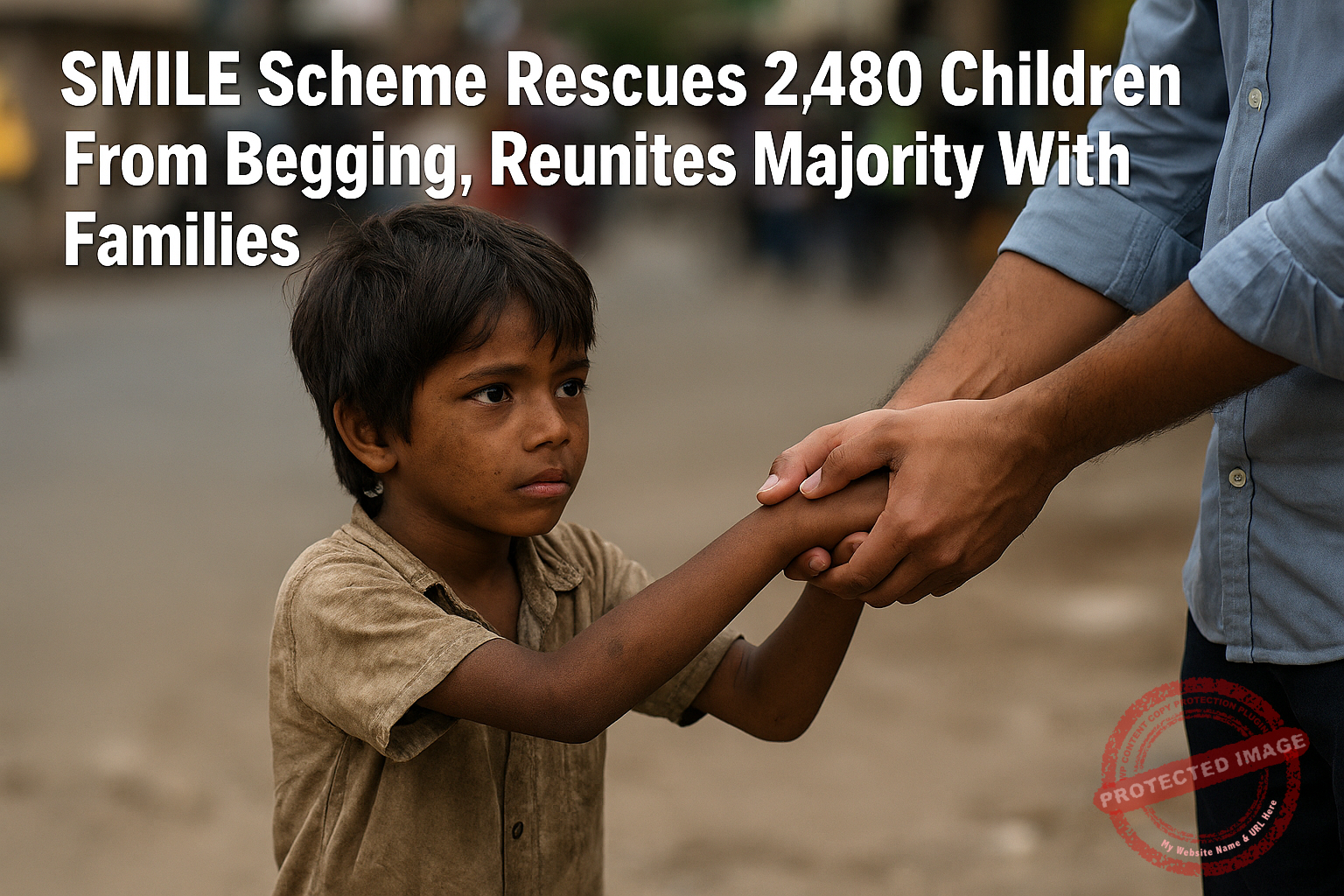
Children found engaged in begging receive focused intervention. Implementing Agencies conduct outreach camps to encourage families to enrol their children in school, obtain Aadhaar cards and access medical assistance. A major part of the process involves reuniting identified children with their families wherever possible, while also linking them to Anganwadi centres and government schools to ensure continuity in nutrition, learning and basic care.
For children without family support, the government extends rehabilitation through Child Care Institutions under the Mission Vatsalya Scheme of the Ministry of Women and Child Development. These institutions offer a comprehensive package that includes education, vocational training, recreation, counselling, healthcare and other forms of long-term support required for a stable future.
According to official data, 2,480 children engaged in begging have been rehabilitated under the scheme so far. Of these, 1,468 have been reunited with their parents or guardians, while 277 have been connected to Anganwadi centres. Another 223 children have been referred to the Child Welfare Committee for further care-related decisions, and 512 have been facilitated for enrolment in schools—reflecting a multi-pronged approach aimed at not just removing children from street situations but also ensuring their sustained development.
The ministry’s ongoing efforts underline a broader national commitment: transforming rescue into rehabilitation and shifting vulnerable children from cycles of deprivation to pathways of opportunity.