

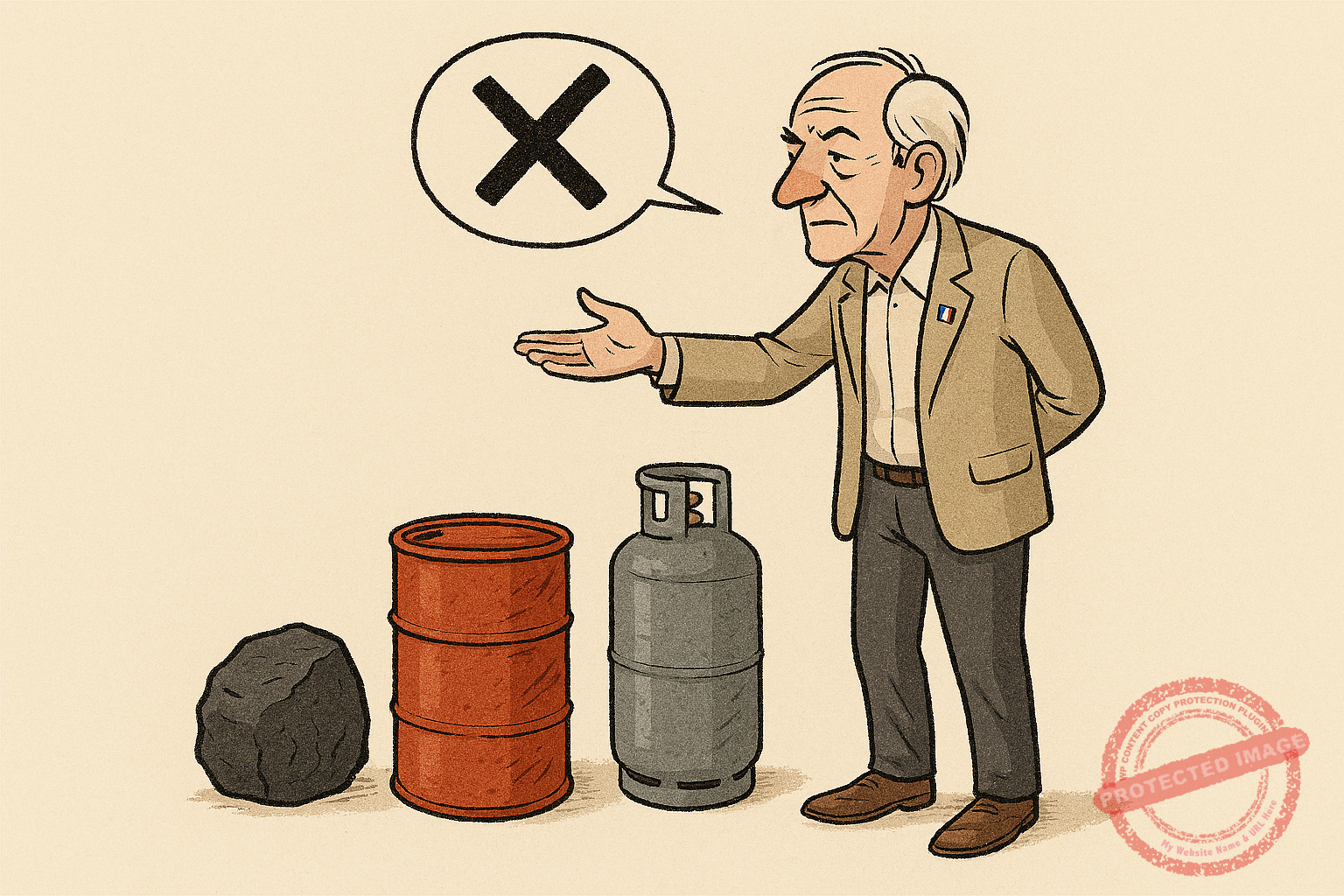

France has unveiled Europe’s first fuel‑by‑fuel roadmap for ending fossil fuel use, setting deadlines to phase out coal by 2030, oil by 2045 and fossil gas by 2050. Announced at the Santa Marta global conference on transitioning away from fossil fuels, the move positions France as one of the earliest advanced economies to translate long‑term climate targets into explicit sectoral timelines.
Presented on April 28, 2026, at the inaugural conference jointly hosted by Colombia and the Netherlands and attended by nearly 60 countries, the roadmap does not introduce new climate pledges. Instead, it consolidates existing policies into a single framework that sets clear end‑dates for fossil fuel use across the economy, offering what analysts say is greater predictability for industry, households, investors and financial markets.
The Santa Marta conference emerged after the UN climate summit COP30 failed to reach agreement on a global fossil fuel phase‑out plan, prompting a coalition of willing countries to pursue progress outside the formal UN process. France’s decision to publish a detailed national roadmap is expected to increase pressure on other advanced economies to follow suit with similarly specific transition pathways.
The French plan draws on the country’s existing international climate commitments and two core domestic frameworks: the National Low‑Carbon Strategy (SNBC) and the third Multiannual Energy Programme (PPE3). Analysts say its main contribution lies in translating broad net‑zero ambitions into measurable, fuel‑specific timelines that can be tracked against real‑world progress.
Unlike long‑dated net‑zero targets that may rely heavily on future offsets, the roadmap sets explicit deadlines for exiting each major fossil fuel. It aligns with France’s goal of cutting greenhouse gas emissions by 5 per cent annually between 2024 and 2028 and achieving carbon neutrality by 2050. Benoit Faraco, France’s envoy to the conference, said the roadmap establishes economy‑wide deadlines for ending fossil fuel use in Europe’s second‑largest economy.
Fuel‑specific targets, analysts noted, are easier for regulators, utilities, automakers, builders and financiers to plan around than general emissions goals. Some critics argued that a 2050 exit from fossil gas may come too late given Europe’s broader decarbonisation needs, while others said firm deadlines are politically significant because they create expectations that can later be tightened. At the same time, analysts cautioned that distant targets risk signalling complacency rather than the acceleration required to meet climate goals.
Concerns were also raised about long‑term policy certainty, with experts warning that future governments could revise the roadmap after national elections. Business groups and clean‑energy developers have repeatedly stressed that stability is as important as ambition when mobilising long‑term investment.
The announcement comes amid ongoing supply disruptions and elevated fuel prices linked to conflict in West Asia, reinforcing the economic case for reducing dependence on imported energy. France remains heavily reliant on foreign hydrocarbons: in 2023, fossil fuels accounted for under 60 per cent of final energy consumption, while more than 95 per cent of fossil fuels used in the country were imported. Oil represented 38 per cent of final energy use in 2024, with fossil gas accounting for 19 per cent. France’s energy trade deficit has fluctuated between €40 billion in 2017 and €120 billion in 2022, underlining its exposure to global fuel markets.
Under its Multiannual Energy Planning framework, France aims to reduce fossil fuels’ share of final energy consumption from around 60 per cent in 2023 to 40 per cent by 2030 and 30 per cent by 2035. Measures include closing the country’s last two coal‑fired power plants by 2027, accelerating transport electrification, replacing oil and gas boilers with heat pumps, and expanding clean electricity generation.
France plans to install one million heat pumps annually by 2030, cut gas use by 85 terawatt‑hours by that year—equivalent to about 20 per cent of current gas imports—and ensure that two out of every three new cars sold are electric by 2030. On the supply side, it plans new EPR2 nuclear reactors, 15 gigawatts of offshore wind by 2035, a threefold expansion of solar capacity, increased hydropower output, and up to 8 gigawatts of electrolyser capacity for hydrogen.
Already, around 95 per cent of France’s electricity comes from nuclear and renewable sources, making its power grid among the least carbon‑intensive in Europe. However, emissions reductions slowed for a second consecutive year in 2025, and analysts note that other countries, including Germany, have previously delayed fossil fuel exits under energy security pressures.
For France, the focus now shifts from announcing deadlines to delivering faster implementation, stable regulation, adequate financing and a socially just transition. If successful, the roadmap could become one of the clearest examples yet of how advanced economies convert climate goals into concrete plans for ending fossil fuel use.