










When paperwork refuses to acknowledge death, sometimes death itself shows up at the counter.
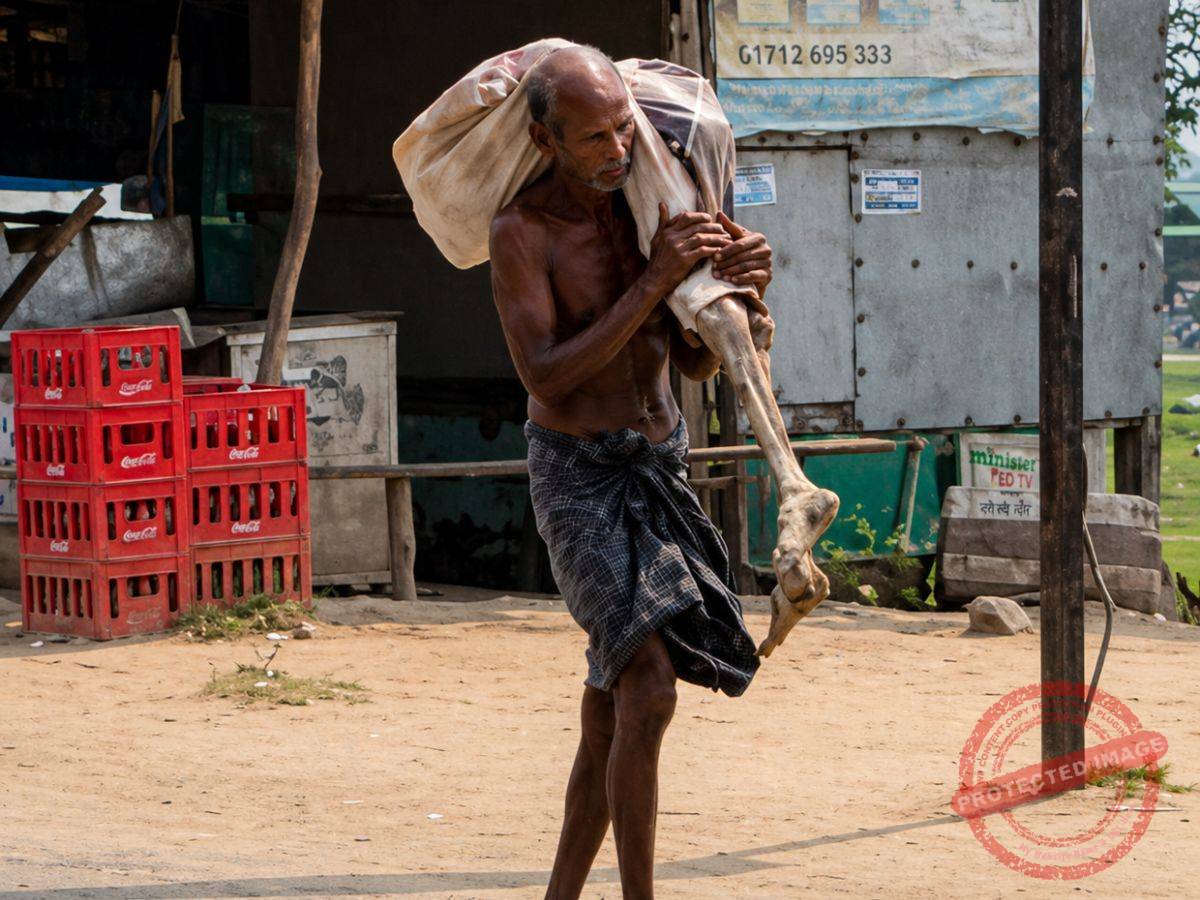
In a baffling and grimly absurd episode from Odisha’s Keonjhar district, a 50-year-old tribal man arrived at a rural bank branch carrying what he believed was the only document left that could convince officials—his sister’s skeleton.
The incident unfolded on Monday at the Maliposi branch of Odisha Grameen Bank in Patana block. Jeetu Munda, a daily-wage worker from Dianali village, was allegedly trying to withdraw Rs 20,000 from the account of his elder sister, Kalra Munda, who died on January 26 this year. With no formal education and little understanding of banking rules, Jeetu said he had been sent back repeatedly after being asked to bring the account holder in person.
“She is dead,” he reportedly told officials. “They did not listen.”
So Jeetu did exactly what he thought was being asked. In a moment that mixed desperation with tragic literalism, he dug up his sister’s grave and carried her skeletal remains to the bank as proof.
The scene caused panic and distress at the branch, and police were quickly called in. Patana police inspector Kiran Prasad Sahu later described Jeetu as an illiterate man unfamiliar with legal heir or nominee procedures, adding that bank staff had failed to explain the process clearly or compassionately.
After police intervention, the remains were respectfully reburied, and Jeetu was assured by police that the administration would help him access the money legally. District officials confirmed that Kalra Munda’s nominated beneficiary was also deceased, leaving Jeetu as the sole legitimate claimant to the account.
The local Block Development Officer said he had not been approached earlier for heir certification and promised to resolve the issue now that it had come to light.
Meanwhile, the story took another turn online. Indian Overseas Bank issued a clarification on X, distancing itself from claims that officials demanded the physical presence of the deceased. According to the bank, the man arrived in an inebriated state, became disruptive, and later returned with human remains, creating a “highly distressing situation”.
Between procedural paperwork, poor communication, and raw grief, the episode exposed how rigid systems can fail those least equipped to navigate them. In the end, Jeetu Munda didn’t just bring proof of death to a bank—he brought attention to a system where sometimes, common sense is the hardest document to produce.