











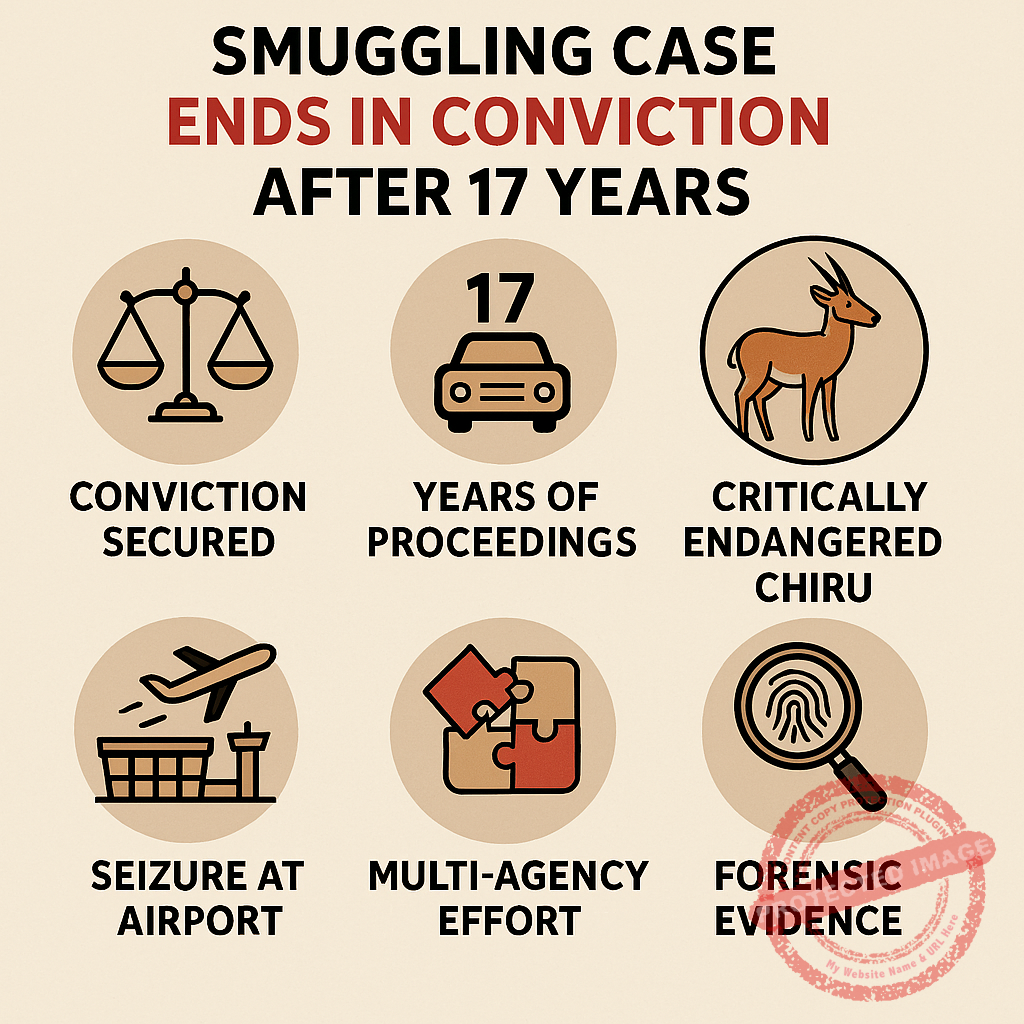
In a significant victory for wildlife law enforcement, a New Delhi court has convicted a Jaipur-based art gallery owner for attempting to illegally export Shahtoosh shawls, a luxury item made from the hair of the critically endangered Tibetan Antelope or Chiru. The Chief Judicial Magistrate at the Rouse Avenue District Courts convicted Syed Shahid Ahmed Kashani, proprietor of M/s Indian Art Gallery, on March 12, 2026, closing a case that began with a seizure at Delhi airport in December 2008.
The Tibetan Antelope is protected under Schedule I of the Wildlife (Protection) Act, 1972, and trade in its hair is completely banned in India. International trade in Shahtoosh has also been prohibited since 1975 under the CITES convention. The case originated when the Wildlife Crime Control Bureau detected 1,290 shawls suspected to be Shahtoosh in an export consignment at Indira Gandhi International Airport. Acting on the detection, WCCB lodged a complaint with the CBI’s EOU-V Branch in February 2009, marking the first time a wildlife offence was investigated by the CBI.
As Pashmina exports require clearance from wildlife authorities, the consignment was examined by WCCB Inspector Aarti Singh, who identified shawls suspected to contain Shahtoosh fibre. Scientific analysis by the Wildlife Institute of India confirmed the presence of Tibetan Antelope hair in 41 shawls through multiple rounds of forensic testing. The case was formally initiated by then WCCB Regional Deputy Director Ramesh Kumar Pandey, who coordinated the investigation and forensic referrals and remained associated with the case throughout. Customs authorities ensured secure custody of seized shawls, while WII scientists provided key forensic reports and expert testimony in court. The investigation was led by CBI Inspector Sanjay Dubey.
The accused claimed he had purchased only machine-made Pashmina shawls from a Delhi trader and denied any illegal intent. His defence challenged the identification process and forensic evidence, but the court rejected all arguments, upheld the scientific findings and observed that the accused’s conduct did not support his claims of innocence. Kashani was sentenced to three years of simple imprisonment and fined Rs 50,000 under the Wildlife Act, along with additional concurrent sentences of two years under other provisions. The seized shawls have been ordered to vest with the government. The conviction underscores the importance of long-term coordination between enforcement, investigative and scientific agencies in successfully prosecuting complex wildlife crimes.
The Tibetan Antelope is protected under Schedule I of the Wildlife (Protection) Act, 1972, and trade in its hair is completely banned in India. International trade in Shahtoosh has also been prohibited since 1975 under the CITES convention. The case originated when the Wildlife Crime Control Bureau detected 1,290 shawls suspected to be Shahtoosh in an export consignment at Indira Gandhi International Airport. Acting on the detection, WCCB lodged a complaint with the CBI’s EOU-V Branch in February 2009, marking the first time a wildlife offence was investigated by the CBI.
As Pashmina exports require clearance from wildlife authorities, the consignment was examined by WCCB Inspector Aarti Singh, who identified shawls suspected to contain Shahtoosh fibre. Scientific analysis by the Wildlife Institute of India confirmed the presence of Tibetan Antelope hair in 41 shawls through multiple rounds of forensic testing. The case was formally initiated by then WCCB Regional Deputy Director Ramesh Kumar Pandey, who coordinated the investigation and forensic referrals and remained associated with the case throughout. Customs authorities ensured secure custody of seized shawls, while WII scientists provided key forensic reports and expert testimony in court. The investigation was led by CBI Inspector Sanjay Dubey.
The accused claimed he had purchased only machine-made Pashmina shawls from a Delhi trader and denied any illegal intent. His defence challenged the identification process and forensic evidence, but the court rejected all arguments, upheld the scientific findings and observed that the accused’s conduct did not support his claims of innocence. Kashani was sentenced to three years of simple imprisonment and fined Rs 50,000 under the Wildlife Act, along with additional concurrent sentences of two years under other provisions. The seized shawls have been ordered to vest with the government. The conviction underscores the importance of long-term coordination between enforcement, investigative and scientific agencies in successfully prosecuting complex wildlife crimes.