











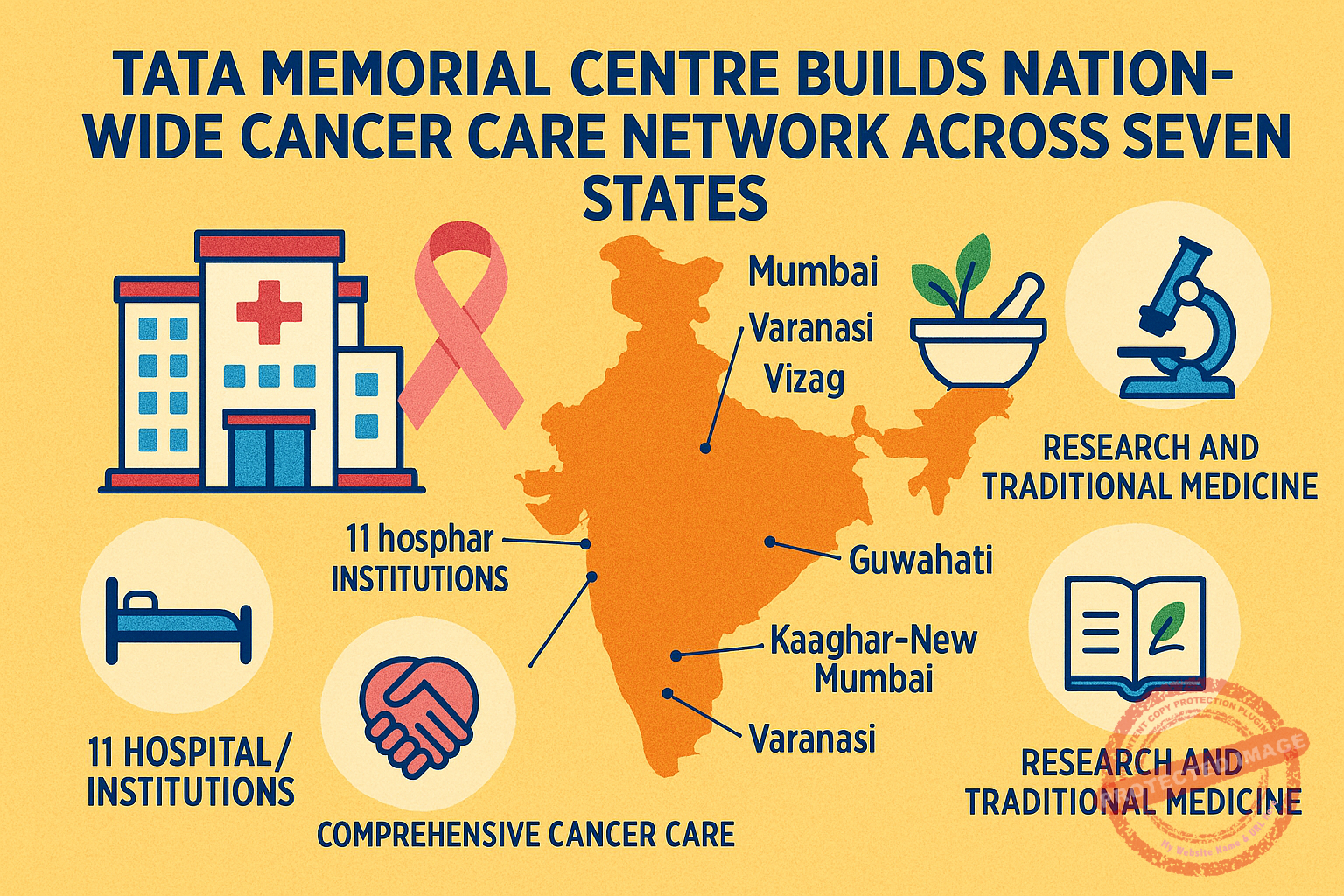
The Tata Memorial Centre (TMC), under the administrative control of the Department of Atomic Energy (DAE), has expanded its cancer care network across seven states with the establishment of 11 hospitals and institutions. These centres, spread across Mumbai, Navi Mumbai, Punjab, Varanasi, Visakhapatnam, Muzaffarpur and Guwahati, aim to deliver comprehensive and affordable cancer treatment to patients across the country.
In a significant step toward integrating traditional knowledge systems with modern cancer research, TMC has set up a specialised facility at Khopoli. This centre focuses on drug discovery rooted in the Indian system of medicine, targeting the development of low‑cost drugs with minimal side effects. It also promotes the cultivation and conservation of medicinal plants unique to India. Alongside these initiatives, TMC is establishing a 200‑bed state‑of‑the‑art cancer hospital and research centre at the NISER campus in Jatni, Odisha, which is expected to play a major role in advancing clinical care and research in the region.
Several TMC hospitals already serve as major cancer care hubs. These include Tata Memorial Hospital, Mumbai (650 beds); the Advanced Centre for Treatment, Research and Education in Cancer, Navi Mumbai (930); Mahamana Pt. Madan Mohan Malaviya Cancer Centre, Varanasi (394); Homi Bhabha Cancer Hospital, Varanasi (189); Homi Bhabha Cancer Hospital & Research Centre, Visakhapatnam (210); and two centres in Punjab—New Chandigarh (300) and Sangrur (150). Other key institutions include Dr. B. Borooah Cancer Institute in Guwahati (312 beds) and the Homi Bhabha Cancer Hospital and Research Centre in Muzaffarpur (107 beds).
TMC is now preparing to add new facilities to its network. The 583‑bed Platinum Jubilee Block in Mumbai is expected to begin operations in March 2027, while the Integrated Centre for Treatment, Research and Education in Cancer (ICTREC) at Khopoli is scheduled to start functioning in June 2026 with 75 beds. The upcoming 200‑bed Homi Bhabha Cancer Hospital in Bhubaneswar is projected to open in May 2026.
According to officials, the expansion of TMC hospitals demonstrates that a large, high‑quality cancer care network can be created and replicated across the country. The Centre is currently focused on consolidating and strengthening its newer units outside Mumbai. This involves developing specialised human resources, standardizing clinical pathways established over decades at the Mumbai headquarters, building robust IT systems, and creating essential support facilities for staff, trainees and patients.
The National Cancer Grid (NCG), an initiative coordinated by Tata Memorial Hospital, is playing a key role in raising the quality of cancer care nationwide. With 380 member cancer centres, research bodies and patient groups, the NCG facilitates standardised pathology reporting, resource‑stratified clinical guidelines, virtual tumour boards, and training programs such as the travelling school of pathology and nursing. Though the NCG does not operate on a hub‑and‑spoke model, it provides the technical backbone required for enhancing cancer services across institutions.
Officials added that TMC could also spearhead the development of an oncology‑focused electronic medical record system for adoption by cancer centres across India. Such a platform would not only streamline data collection but also help enforce uniform treatment practices nationwide—an essential step toward ensuring high‑quality cancer care for all.