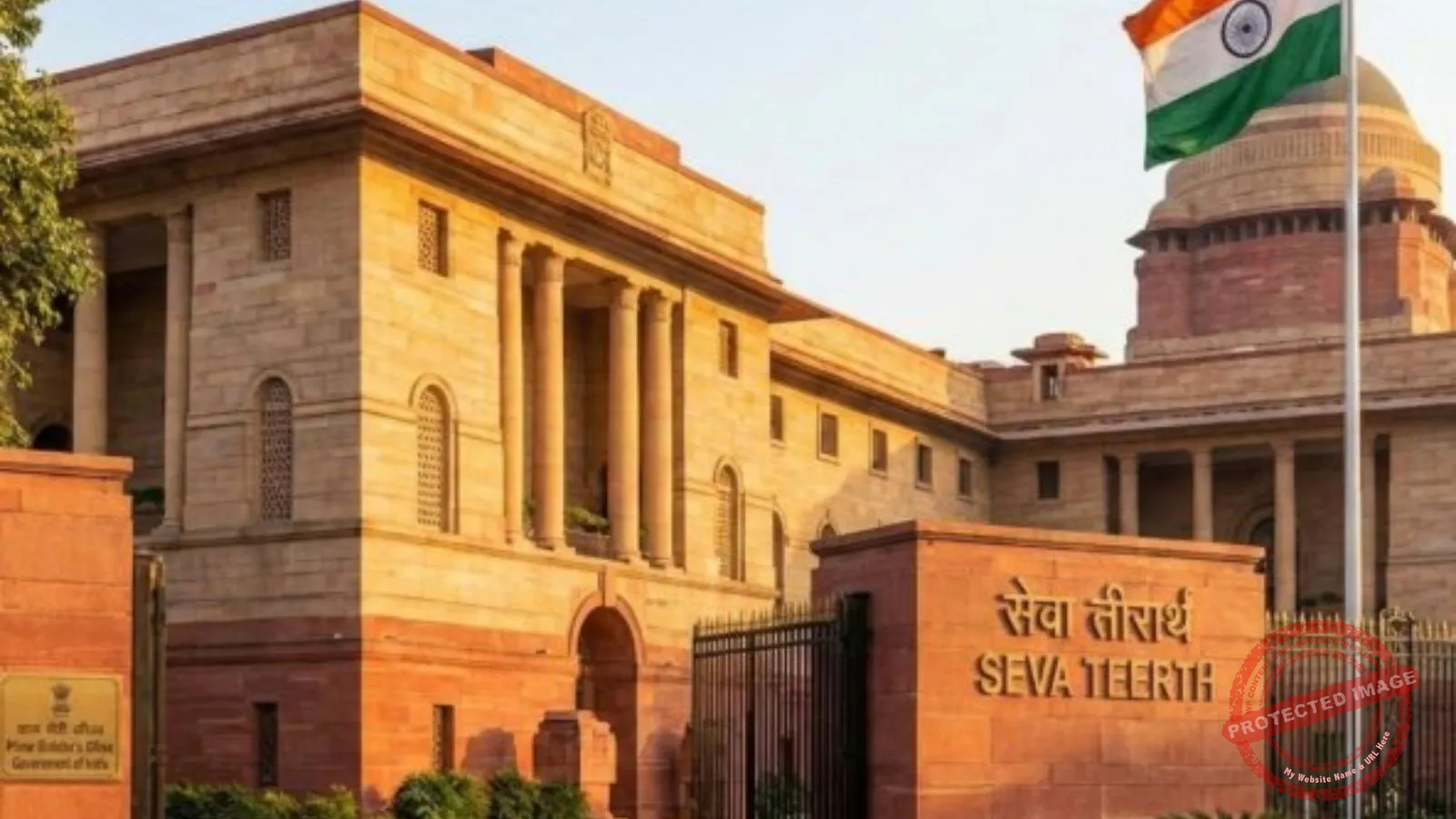
On 13 February 2026, the Prime Minister dedicated to the nation the new Prime Minister’s Office, which will now be known as Seva Teerth. The move marks the government’s decision to vacate the nearly 95‑year‑old North and South Blocks—administrative buildings constructed during the British era and long associated with India’s colonial legacy.
Since Independence, the Prime Minister’s Office has operated from the South Block, and Thursday’s meeting of the Union Cabinet became the last to be held in its historic chamber.
The occasion was described as a significant moment where history meets the future. Over the decades, the complex has witnessed a succession of 16 Prime Ministers, from Jawaharlal Nehru to Narendra Modi, shaping India’s journey from independence to a confident, modern nation.
Cabinets convening within these walls have deliberated on matters ranging from Partition and wartime crises to policy reforms during peaceful periods, transitioning from an era of typewriters to today’s digital governance frameworks.
Officials who worked in the South Block over generations were credited with steering India through its early post‑Independence uncertainties and helping the country emerge from economic challenges. The government noted that India now stands among the world’s leading economies and plays an increasingly influential role on global platforms.
In the past decade, South Block has been the site of several major decisions under Prime Minister Narendra Modi’s leadership, including initiatives linked to governance reforms, welfare programmes, and digital transformation.
Notable decisions cited by the government include the implementation of Direct Benefit Transfer, Swachh Bharat Abhiyan, Digital India, and GST, along with moves relating to Article 370, the law against triple talaq, and national security actions such as surgical and air strikes.
The government said the transition to Seva Teerth and the newly built Kartavya Bhavans reflects the country’s aspiration for a modern, technologically advanced and environmentally sustainable administrative ecosystem designed to enhance productivity and embody a spirit of service. The shift is seen as symbolic of India’s progression from its colonial past toward the goal of becoming a developed nation.
The Cabinet also resolved that the vacated North and South Blocks be incorporated into the upcoming “Yuge Yugeen Bharat National Museum,” envisioned as a repository celebrating India’s civilizational heritage and linking its historical legacy with future aspirations. The Cabinet expressed appreciation for the Prime Minister’s leadership in steering this transformation of the governance hub from colonial-era structures to a renewed institutional identity rooted in service.