











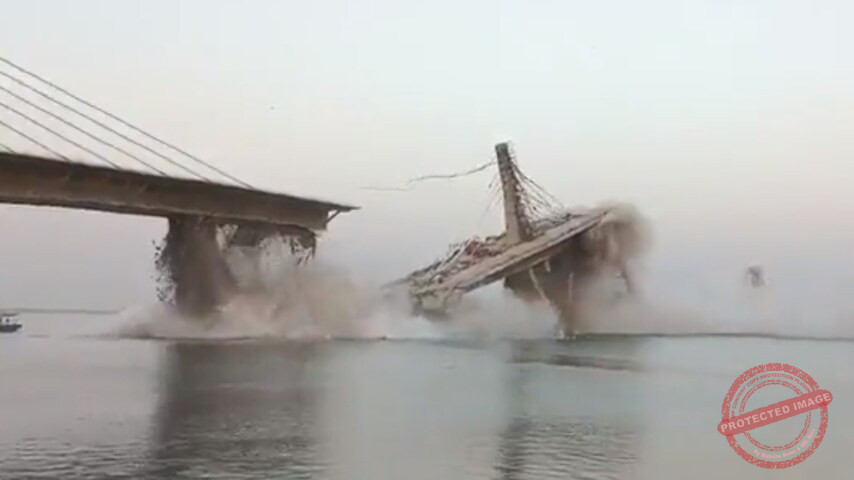
India’s infrastructure crisis is not anecdotal—it’s statistical. India witnessed a serious 42 bridge collapses between 2020 and 2025 including 26 bridges and 16 under construction bridges. The collapse, in official records of the Ministry of Road Transport and Highways (MoRTH) , claimed 21 lives.
However, media reports claimed between 2020 and 2025, India saw 170 bridge collapses, killing 202 people and injuring 441. These numbers are sharply at odds with official records of the Ministry of Road Transport and Highways (MoRTH) which acknowledges only 42 collapses between 2019 and 2024, a fraction of reality.
As per Union Minister of State for Road Transport & Highways, Shipping and Chemical & Fertilizers Mansukh Mandaviya the Ministry of Road Transport & Highways had inventorized 1,72,517 bridges/structures under Indian Bridge Management System (IBMS). These structures comprise 1,34,229 culverts, 32,806 minor bridges, 3,647 major and 1,835 extra-long bridges. Earlier there was no proper data available on these structures on the National Highways network.
As per media reports, a structural audit under the Indian Bridge Management System found 30% of culverts, 12% of minor bridges, 8% of major bridges, and 5% of extra‑long bridges to be in “poor condition.”
A National Epidemic of Bridge Collapses
Bihar has become the emblem of infrastructural decay. The 2024 monsoon saw 12 bridge collapses in just 17 days, across Siwan, Saran, Madhubani, Araria, East Champaran, and Kishanganj.
The Supreme Court noted in April 2025 that Bihar’s explanations amounted to a “litany of schemes” rather than actual reasons—and highlighted that suspended officials return to duty quietly after public anger subsides.
Even outside Bihar, India’s structural fragility is staggering: Reports revealed India has 150,746 railway bridges, and 25.8% of them are over a century old—a massive maintenance burden.
Mumbai’s Flyover Fiasco
Mumbaikars are once again staring at a flyover so strangely designed that it’s hard to believe it was approved at all. It raises a worrying question: How can India’s richest city keep getting such basic things so wrong? Just two years after the Gokhale Bridge mess, the city has another head‑scratcher. On the new Mira–Bhayander flyover, four lanes suddenly shrink to two, creating an instant bottleneck. While people are shocked, officials remain unfazed. The MMRDA claims this awkward squeeze actually “smoothens” traffic—but residents aren’t convinced. To them, it feels like yet another example of poor planning being passed off as smart engineering. And this isn’t the first time.
The 2024 Gokhale Bridge disaster, where a 2‑metre gap between two flyover sections looked like drivers were expected to attempt a stunt jump? Then came the 2025 Palava Bridge, which had to be closed almost immediately because the road surface began falling apart. Sadly, these aren’t isolated goof‑ups. They are signs of a larger, nationwide problem—bad design, bad oversight, and worse accountability.
Recent High‑Profile Disasters
From Gujarat to Madhya Pradesh to Maharashtra, the list is long. The Gambhira bridge collapse in Gujarat (July 2025) killed at least 9–20 people, depending on reports, marking yet another tragic monsoon infrastructure failure. Also the Bhopal Aishbagh Rail Overbridge, initially thought to have a 90° turn but later measured at 118–119°, led to the suspension of seven engineers and blacklisting of the contractor. Nationally, government data shows 21 national‑highway bridges collapsed in the last three years, including 15 already built and 6 under construction.
Why Does This Keep Happening?
Why do such poorly designed projects get finished in the first place? And why does public anger barely make a difference?
The truth is that India’s recurring bridge failures point to a much deeper problem in how our systems work. It’s similar to the way adulterated food slips into the market—not because people don’t know they’re harmful, but because those who profit from the shortcuts feel protected. The very people responsible for checking quality are often connected to, or influenced by, the ones cutting corners. So the watchdog ends up working for those it’s supposed to watch.
When 30–40% of bridges in the country are already known to be in poor or aging condition, and when inspections are done just for show or easily bypassed, the idea of “quality control” becomes meaningless. Accountability rarely goes beyond temporary suspensions or paperwork. As a result, quality stops being an engineering standard and becomes yet another victim of a system where corruption, shortcuts, and weak oversight are normal.
The Real Cost
Beyond immediate safety hazards, failing to address structural deterioration guarantees India will continue as an also‑ran in global competitiveness, bleeding resources, credibility, and human lives.