










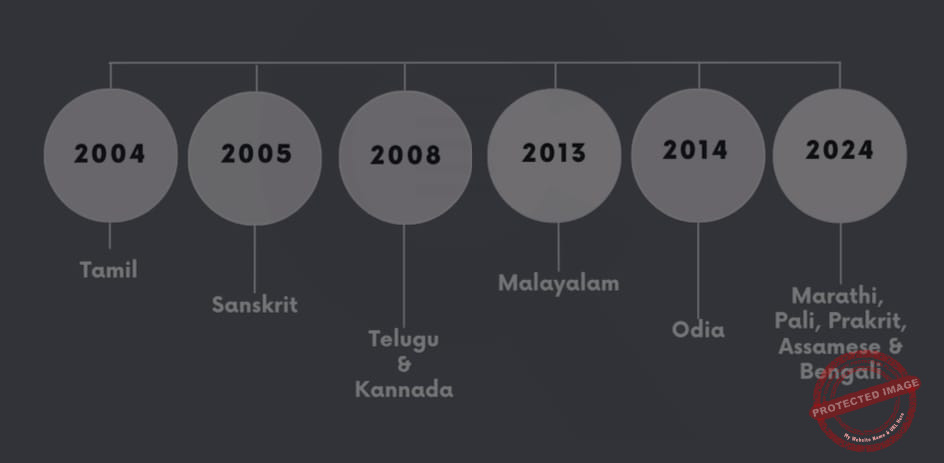
India now has 11 Classical Languages, with Marathi, Assamese, Bangla, Pali and Prakrit added to the list on October 4, 2024. Tamil was the first to be recognised in 2004, followed by Sanskrit (2005), Telugu and Kannada (2008), Malayalam (2013) and Odia (2014). The Ministry of Education is responsible for promoting and preserving these languages and ensuring they remain a part of India’s academic and cultural system.
Institutional Support and Funding
To support these languages, the government has set up dedicated institutions—especially for Sanskrit, which is taught and researched in three central universities:
-
Central Sanskrit University, New Delhi
-
Shri Lal Bahadur Shastri National Sanskrit University, New Delhi
-
National Sanskrit University, Tirupati
The government has also steadily increased funding. In the 2025–26 Union Budget:
-
Tamil received the highest grant at Rs 1,697 lakh.
-
Kannada, Telugu, Odia and Malayalam each received Rs 106.50 lakh.
Since 2015, funding for Kannada and Telugu has almost doubled, and allocations for Malayalam and Odia have also grown since 2020–21.
How Widely Are These Languages Spoken?
According to the 2011 Census:
-
Bangla has the highest number of speakers: 972 lakh
-
Marathi: 830 lakh
-
Telugu: 811 lakh
-
Tamil: 690 lakh
-
Kannada: 437 lakh
-
Odia: 375 lakh
-
Malayalam: 348 lakh
-
Assamese: 153 lakh
-
Sanskrit: only about 0.24 lakh speakers
-
In Bihar, parts of the population are believed to speak Pali, which has now been added to the classical list.
What Makes a Language “Classical”?
To qualify, a language must:
-
Be at least 1,500–2,000 years old
-
Have ancient and valuable literature
-
Have developed its own original literary tradition
Only languages with deep cultural roots and historical influence are given this status.
Classical vs Scheduled vs Official Languages
-
Classical languages highlight cultural and literary heritage.
-
Scheduled languages (22 in total) are listed in the Constitution for use in government and education.
-
Official languages—Hindi and English—are used for government work and legal processes.
-
India has no national language.
Cultural and Educational Importance
The government views this effort as supporting Sustainable Development Goal 4 (Quality Education), especially by promoting cultural understanding and peace. Continued funding for Tamil, Telugu, Kannada and others strengthens India’s model of linguistic federalism, where regional identities are respected.
The recent recognition of Pali and Prakrit shows renewed interest in reviving languages central to Buddhist and Jain traditions, even though they have few modern speakers.
New Initiatives
-
In 2020, three Central Universities were created to promote Sanskrit.
-
The Central Institute of Classical Tamil supports translation of ancient texts, research, and academic courses.
-
Centres for Excellence in Kannada, Telugu, Malayalam and Odia have been set up under the Central Institute of Indian Languages, Mysuru.