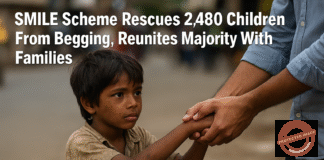











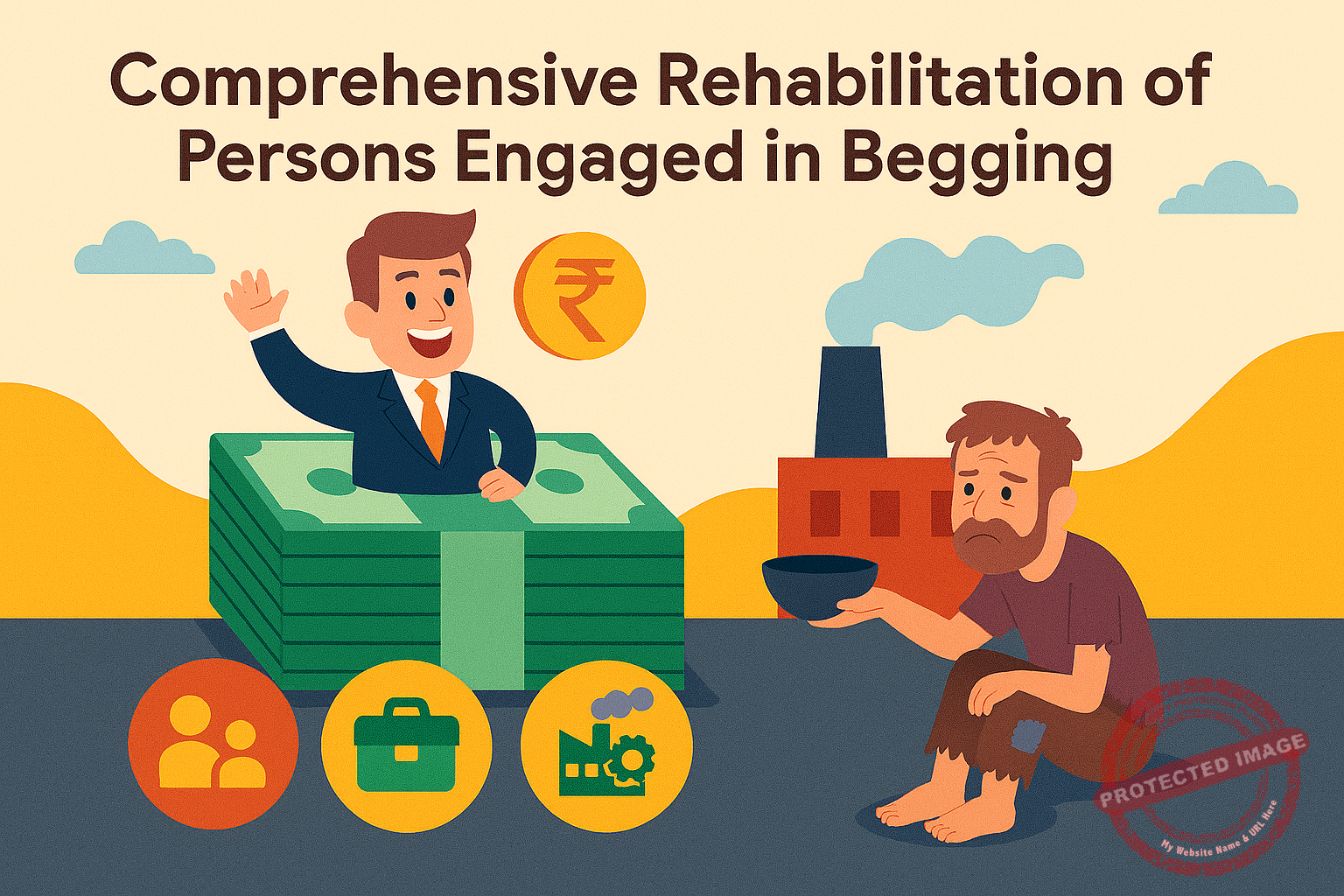
Since the inception of the SMILE (Support for Marginalized Individuals for Livelihood and Enterprise) sub-scheme, “Comprehensive Rehabilitation of Persons Engaged in the Act of Begging,” on 23 October 2023, a total of 31,055 persons have been identified across the country as engaged in begging. Of these, 9,855 individuals—including 2,480 children—have been rescued and rehabilitated under the scheme. The rehabilitation efforts resulted in 4,021 persons securing wage employment, while 1,556 took up self-employment, marking a significant step toward social reintegration and economic independence.
Tamil Nadu reported the highest number of identified persons engaged in begging, with 9,145 individuals, of whom 1,590 have been rehabilitated. A total of 357 persons in the state were provided wage employment and 298 became self-employed. Uttar Pradesh stood second with 3,592 identified individuals; of them, 1,716 were rehabilitated, 1,223 secured wage employment, and 223 became self-employed. Delhi recorded 3,318 individuals, with 372 rehabilitated, 186 provided wage employment, and 50 opting for self-employment. Andhra Pradesh reported 2,569 individuals, of whom 653 were rehabilitated, 400 received wage employment, and 50 moved into self-employment. Madhya Pradesh ranked fifth with 1,772 individuals identified; 1,291 of them were rehabilitated, 357 secured wage employment, and 208 became self-employed.
The SMILE sub-scheme is implemented through District Administrations, Urban Local Bodies, Municipal Corporations and other agencies working in the field of beggary prevention. As per the guidelines, implementing authorities select implementing agencies or NGOs through a prescribed process. Requests for rehabilitation are not receive rehabilitation requests directly, as all rescued individuals are rehabilitated based on their willingness and needs under the scheme’s provisions.
Rehabilitation under the scheme is facilitated through a convergence model that links beneficiaries with various Central and State Government programmes. Individuals receive skill development and livelihood training in locally relevant trades such as carpentry, tailoring, cooking, gardening, security services, sanitation work, e‑rickshaw driving and other vocational activities. Beneficiaries are also supported in forming community or Self Help Groups and establishing linkages with banks for financial assistance to undertake income‑generating activities.
The sub-scheme ensures that rescued persons receive shelter, counselling, vocational training and long‑term support through linkages with appropriate welfare and livelihood schemes. Because the programme operates through convergence, the Ministry does not maintain detailed data on the current employability or livelihood status of rehabilitated individuals. When required, individuals are connected to Old Age Homes, De‑addiction Centres and other care institutions. Children rescued under the scheme are re-associated with their families or produced before Child Welfare Committees for further care arrangements.
Through comprehensive support, follow‑up action and sustained skill development efforts, the SMILE sub-scheme aims to ensure effective rehabilitation, long‑term reintegration and prevention of relapse into begging, thereby advancing the Government’s commitment to social justice and inclusive development.