










The Directorate of Revenue Intelligence (DRI) has intensified its crackdown on illegal wildlife trafficking, seizing elephant ivory articles, a leopard skin, two live pangolins, tiger bones and tiger canines in three intelligence-based operations. Eleven people were apprehended in connection with the seizures.
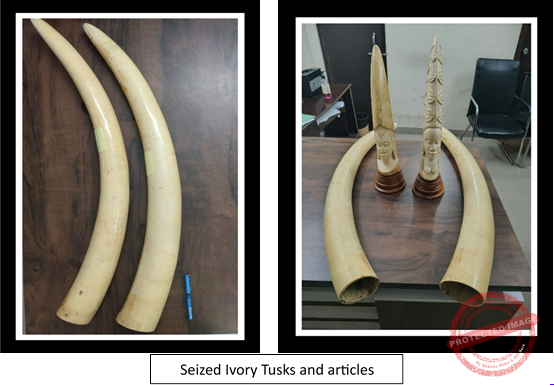
In the first operation, DRI officers acted on specific intelligence about an attempt to illegally sell four elephant ivory articles, including intricately carved pieces. A decoy operation led to the recovery of all four articles and the apprehension of three people allegedly involved in the transaction.
Possession of elephant ivory without a license and trade or dealing in ivory and products made from it are prohibited under Section 49B of the Wild Life (Protection) Act, 1972. The seized articles and the three detained persons were handed over to the jurisdictional Forest Range Officer for further investigation and necessary action.
In a separate operation on September 29, DRI officials kept suspects under surveillance before intercepting two people near Purada village in Gondia district of Maharashtra. They were allegedly attempting to sell a leopard skin.
Officials recovered the skin, while the two suspects were handed over along with the seizure to the Forest Range Officer of Deoria Range, Gondia. The leopard (Panthera pardus) is protected under Schedule I of the Wild Life (Protection) Act.
In another major operation conducted on September 26 and 27 in Maharashtra’s Allapalli forest area, the DRI joined forces with the Forest Department, Wildlife Crime Control Bureau (WCCB), Mumbai, and the USTR Anti-Poaching Unit.
The joint team intercepted six people suspected of involvement in illegal wildlife trade and recovered a live adult pangolin, a live baby pangolin, 3 kg of tiger bones and two tiger canines.
Pangolins are protected under Schedule I of the Wild Life (Protection) Act and are also listed in Appendix I of CITES, which prohibits their international commercial trade. Tigers and their body parts are similarly protected under Schedule I of the wildlife law.
Subsequent investigation and searches led to the recovery of evidence allegedly linked to the poaching, possession, transportation and proposed sale of tiger body parts. The two pangolins, tiger bones, canines and two motorcycles allegedly used by the suspects were seized for further action by the Forest Department.
According to the DRI, the three operations are part of its continuing efforts to disrupt wildlife trafficking networks involved in the illegal possession, transportation and sale of protected species and their derivatives, in coordination with specialized wildlife enforcement agencies.