











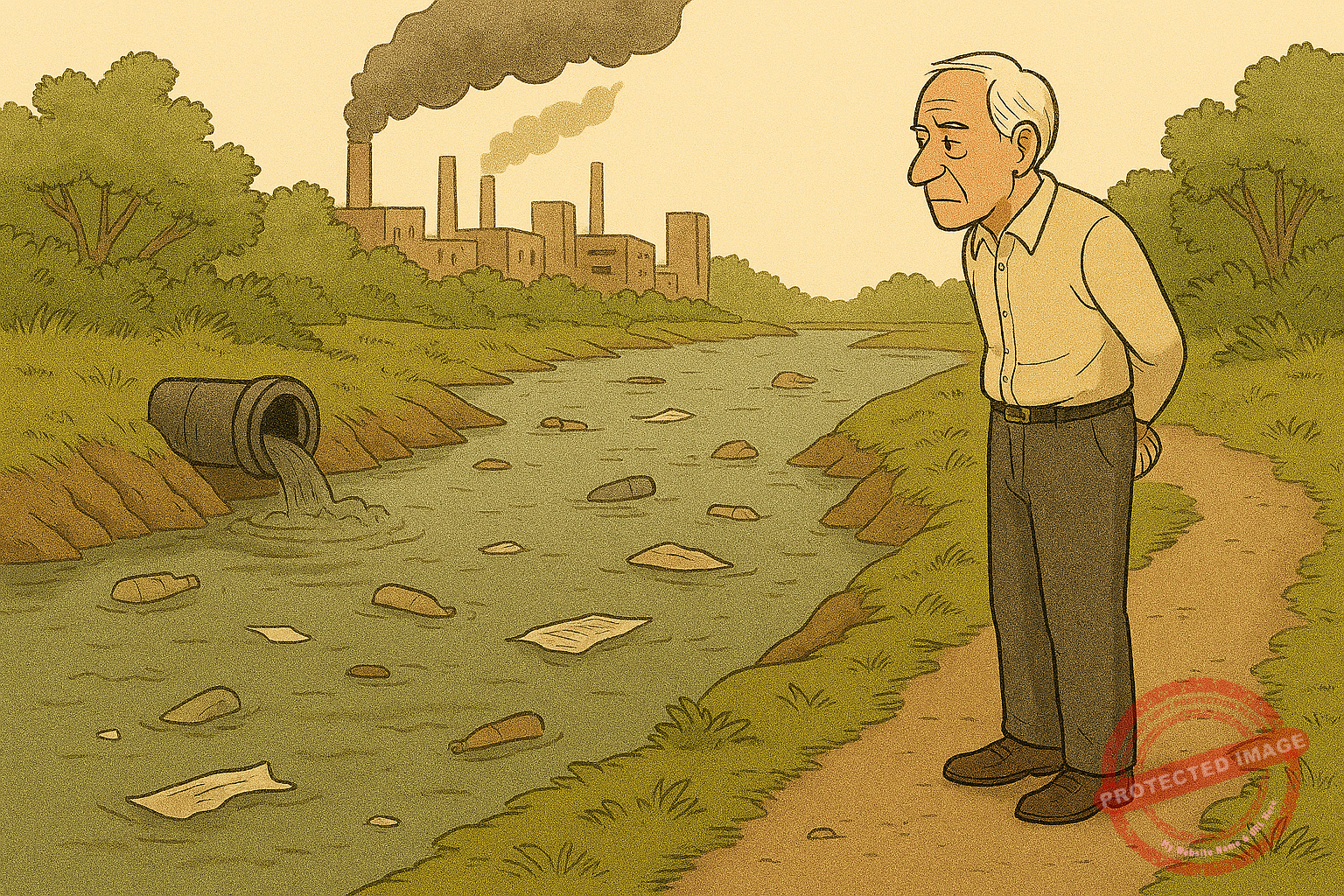
The stretch of the Ganga river flowing through Uttar Pradesh continues to fall under the most polluted category, but water quality indicators are showing steady improvement over time, according to official data shared in Parliament. The Central Pollution Control Board (CPCB) has classified the river stretch as “Polluted River Stretch Category V,” even as successive monitoring reports point to a consistent improving trend, especially in terms of Biochemical Oxygen Demand (BOD) levels.
The government informed the Lok Sabha that water quality along the Ganga and Yamuna in Uttar Pradesh is regularly tracked through the National Water Quality Monitoring Network. Under this system, monitoring stations identify stretches where BOD levels exceed the prescribed limit of 3 mg per litre, a key indicator of organic pollution.
To curb industrial pollution, the CPCB has carried out annual inspections of Grossly Polluting Industries since 2017 in states along the main stem of the Ganga. These inspections are conducted by joint teams comprising officials from third‑party technical institutes and State Pollution Control Boards. In 2024 alone, inspectors covered 2,186 industrial units across 63 districts of Uttar Pradesh. Of these, 1,631 units were operational, while 555 had shut down on their own.
Among the operational units, 1,291 were found complying with environmental norms, while 340 were non‑compliant due to violations of discharge standards or lack of valid consent to operate. The Uttar Pradesh Pollution Control Board issued show‑cause notices to 321 of these units and closure directions to 19. Government data also highlights heavy human‑caused pressure on the Ganga in major cities such as Kanpur, Prayagraj and Varanasi. In Prayagraj, 54 drains discharging into the river have already been tapped, while the remaining 21 are being addressed under various ongoing projects. In Varanasi, 26 drains have been tapped, two partially tapped, and four are covered under active projects.
In Kanpur, 15 drains have been tapped, with the remaining 14 included in sanctioned works. In rural areas, where drains largely carry grey water, waste is being managed through low‑cost measures under the Swachh Bharat Mission (Gramin), including soak pits and constructed wetlands.
Sewage Treatment Plants also remain a key focus. CPCB monitors 49 STPs across 12 districts of Uttar Pradesh. Between April and July 2025, 44 of these plants were found operational, with a combined treatment capacity of 1,483.93 million litres per day.
Under the Namami Gange Mission, the Centre has sanctioned 80 sewerage infrastructure projects in Uttar Pradesh, estimated to cost Rs 16,200 crore. These projects aim to create an additional sewage treatment capacity of 2,700 MLD.
Taken together, the data suggests that while pollution of the Ganga in Uttar Pradesh remains a major challenge, increased monitoring, industrial enforcement and infrastructure expansion are gradually beginning to show results on the ground.