India’s maritime story is riding a strong tide. With over 11,000 km of coastline and nearly 14,500 km of navigable waterways, the country’s ports have quietly become the backbone of its trade and logistics economy—handling nearly 95% of India’s cargo by volume and about 70% by value. At the heart of this transformation is the Sagarmala Programme, launched in 2015, which is steadily reshaping how India moves goods, connects markets and builds coastal economies.
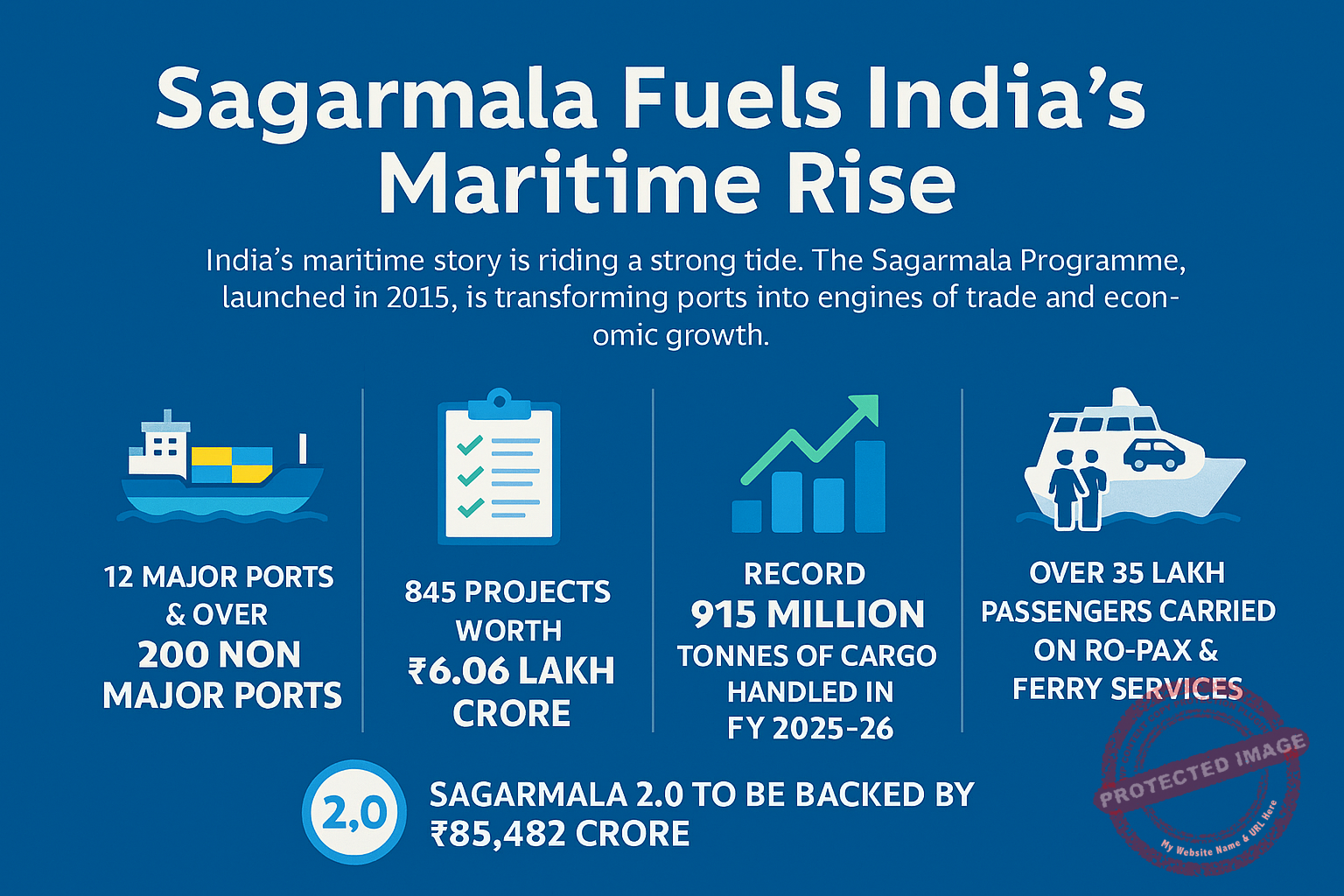
India today has 12 major ports and more than 200 non‑major ports handling everything from crude oil and coal to containers and farm produce. Sagarmala was designed to unlock the full potential of this network by modernising ports, improving links to roads, railways and waterways, promoting port‑based industry, supporting coastal communities and shifting more cargo to coastal shipping and inland waterways.
The scale of progress over the past decade has been substantial. About 845 projects worth Rs 6.06 lakh crore have been taken up under Sagarmala. Of these, 315 projects costing Rs 1.57 lakh crore have already been completed, 210 are under implementation and another 320 are in the planning stage.
On the ground, this has translated into tangible capacity and efficiency gains. Seven new coastal berths have added nearly 10 million tonnes per annum of cargo‑handling capacity. Eleven fishing harbour projects worth over Rs 1,050 crore have been completed, directly benefiting more than 30,000 fishermen. Iconic infrastructure, such as the Bascule Bridge at Kolkata’s Syama Prasad Mookerjee Port, is being restored and upgraded, while safety upgrades like enhanced firefighting facilities at Mumbai Port are underway.
Operational performance at ports has seen a clear upswing. In FY 2025–26, major ports handled a record 915 million tonnes of cargo, exceeding targets and marking over 7% annual growth. Average vessel turnaround time has nearly halved since 2014, falling from 96 hours to under 50 hours. Nine Indian ports now feature among the world’s top 100, underlining rising global competitiveness. Inland waterways have emerged as a major success story, with cargo volumes increasing nearly eight‑fold over a decade.
Sagarmala has also changed how people move. Ro‑Pax and ferry services along the coast and rivers have cut travel time sharply, eased road congestion and carried more than 35 lakh passengers. Routes such as Ghogha–Hazira and Mumbai–Mandwa have turned sea travel into a practical alternative for daily transport.
Beyond infrastructure, livelihoods are gaining momentum. Thousands have been skilled and placed in maritime and allied sectors, while the programme estimates employment potential of nearly one crore jobs over time.
With Sagarmala 2.0 now proposed—backed by Rs 85,482 crore in budgetary support and aligned with long‑term visions for 2030 and 2047—India is aiming higher. The next phase seeks to turn the country into a global maritime hub, cut logistics costs and fuel inclusive growth, ensuring that ports remain not just points on the coast, but engines of India’s economic future.