











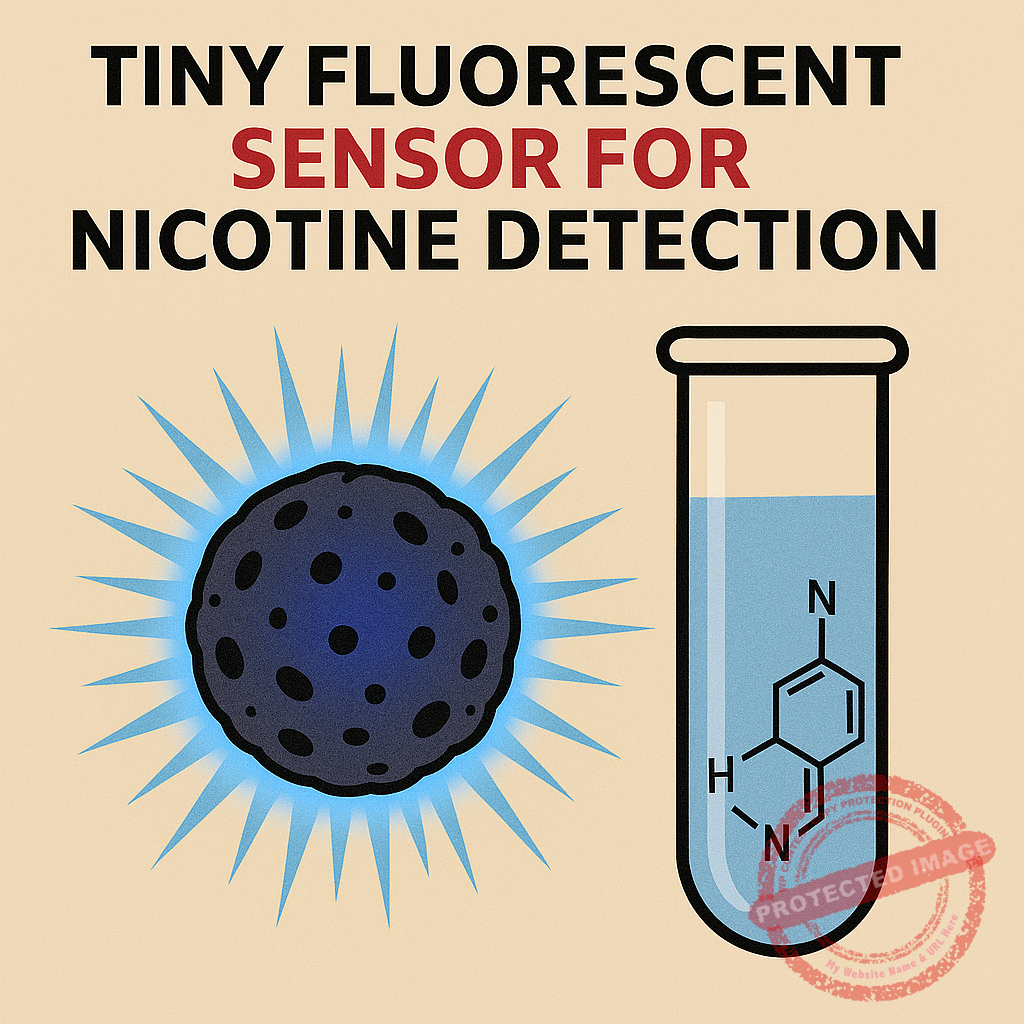
Scientists at the Institute of Nano Science and Technology (INST), Mohali, have developed a tiny fluorescent sensor that can rapidly detect nicotine and its major metabolite cotinine in water-based samples and even inside living cells, opening the door to faster and simpler screening of smoking exposure. Nicotine is the addictive component of tobacco, while cotinine, which stays in the body much longer, is a reliable biomarker found in blood, saliva and urine, making both crucial indicators for public health monitoring and biomedical research.
Current methods used to measure nicotine and cotinine, such as GC-MS, HPLC and immunoassays, are costly, time-consuming and require specialised equipment, skilled operators and complex sample preparation. The new sensor developed by INST researchers offers a much simpler alternative. It is based on an iron metal-organic framework nanosphere, a microscopic, porous structure made from abundant and biocompatible iron.
The nanospheres were synthesised using a solvothermal process and tested for safety and effectiveness. Their sponge-like structure is filled with tiny pores that can trap molecules such as nicotine and cotinine. When these molecules enter the pores, the nanospheres “turn on” and emit a stronger fluorescence with a noticeable shift towards blue light. Using intracellular imaging and confocal microscopy, the researchers tracked how the nanospheres enter cells and respond to the presence of the target molecules.
Reported in the journal Nanoscale, the sensor was found to be highly selective, recyclable and easy to operate, functioning efficiently in aqueous conditions. The fluorescence enhancement occurs due to host–guest interactions and electron transfer between the nanosphere and the trapped molecules, producing a clear and amplified signal. Crucially, the iron-based material shows low cytotoxicity and high biocompatibility, making it suitable for biological and medical applications.
The researchers say this low-cost, iron-based fluorescent sensor could support non-invasive health monitoring, rapid screening for tobacco exposure and studies on nicotine addiction and metabolism. Beyond smoking-related applications, the approach could also pave the way for MOF-based sensing platforms for detecting other important biomarkers, strengthening tools for public health surveillance and biomedical research.