










India’s nuclear energy programme has received a major boost since the signing of international cooperation agreements in 2008, which opened the door for the country to import fuel for reactors under International Atomic Energy Agency (IAEA) safeguards. Since then, India has brought in 18,842.60 metric tonnes of uranium in various forms—ranging from ore concentrate to natural and enriched fuel pellets—helping keep safeguarded reactors running smoothly and ensuring steady power generation across the years.
The government is now preparing for its next big leap in nuclear power. Officials said discussions are underway with technology partners in the United States to finalise a viable project proposal. Construction work will begin once the proposal is completed and receives government approval.
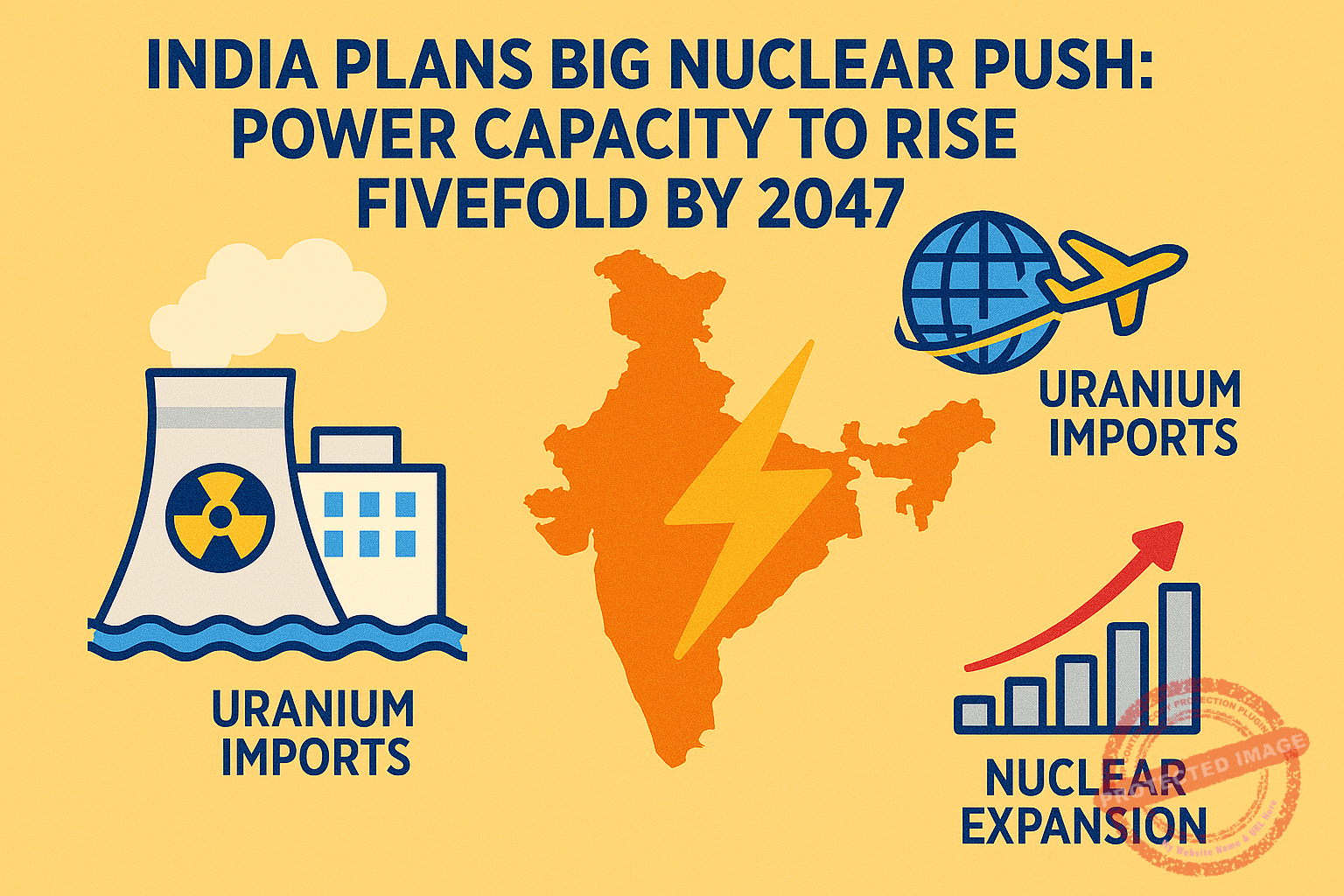
Alongside this, India has laid out an ambitious roadmap to raise nuclear power capacity to 100 gigawatts (GW) in the long term. The current capacity of 8.78 GW is expected to climb to around 22 GW by 2031–32 as ongoing projects are completed. A further 32 GW is planned by 2047 through a mix of indigenous Pressurised Heavy Water Reactors and imported Light Water Reactors that will be built by the Nuclear Power Corporation of India Ltd. The remaining 46 GW is expected to come from other public sector undertakings, state governments, private players and joint ventures, making nuclear energy a major contributor to India’s future energy basket.
A significant policy shift came with the Sustainable Harnessing and Advancement of Nuclear Energy for Transforming India (SHANTI) Act, 2025, passed in December 2025. The Act consolidates nuclear regulations and, for the first time, allows private sector participation in research and innovation related to the peaceful use of nuclear energy—under strict licensing and safety oversight. The government believes this will open the door for new technologies, faster progress and broader investment in the nuclear ecosystem.
Data on electricity generated from imported fuel highlights the growing role of safeguarded reactors. From 3,704 million units in 2009–10, generation steadily climbed over the years, crossing 22,000 million units by 2017–18 and touching nearly 30,000 million units in 2021–22. Output reached a record 39,180 million units in 2024–25, with the current financial year already logging 33,815 million units by January 2026. Officials say this steady rise reflects fuel availability, improved reactor performance and growing operational efficiency.
With international cooperation strengthening, domestic capacity expanding and policy reforms encouraging wider participation, India’s nuclear power sector is entering a phase of rapid growth. As the country aims for cleaner and more reliable energy sources, nuclear power is set to play a pivotal role in meeting long‑term electricity demand while reducing carbon emissions.