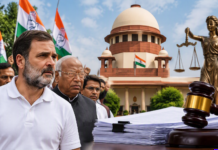











Since 2014, a total of 170 women judges have been appointed to various High Courts across the country, including 96 in the last five years. In the Supreme Court, six women judges have been appointed during this period.
As per official data, India’s 25 High Courts together have a sanctioned strength of 1,122 judges. Out of the 814 judges currently serving, only 116 are women, accounting for 10.33% of the working strength. Notably, the High Courts of Tripura, Uttarakhand and Manipur do not have a single woman judge.
Judges of the Supreme Court and High Courts are appointed under Articles 124, 217 and 224 of the Constitution. These provisions do not mandate reservation for any caste, community, or class. According to the Memorandum of Procedure (MoP), proposals for appointments to the Supreme Court are initiated by the Chief Justice of India, while appointments to High Courts are initiated by the Chief Justice of the concerned High Court.
As of February 6, 2026, the Supreme Court has 33 serving judges against the sanctioned strength of 34, including 1 woman judge.
Among the High Courts, the Punjab & Haryana High Court has the highest number of women judges—18 out of 61 serving judges (sanctioned strength: 85). The Bombay High Court follows with 12 women judges among 80 sitting judges (sanctioned: 94). The Delhi High Court ranks third with 10 women judges out of 44 (sanctioned: 60). The Madras High Court also has 10 women judges among its 53 sitting judges (sanctioned: 75), placing it fourth. At fifth position is the Karnataka High Court with 9 women judges among 46 currently serving (sanctioned: 62).
Further, the Calcutta High Court has 8 women judges among 43 sitting judges (sanctioned: 72), while the Allahabad High Court has 7 women judges out of a large bench of 110 (sanctioned: 160), placing it seventh in the tally.
Other High Courts with their sanctioned strength, current working strength, and number of women judges are as follows:
Telangana High Court: 42 sanctioned, 28 sitting, 7 women
Gujarat High Court: 52 sanctioned, 35 sitting, 7 women
Andhra Pradesh High Court: 37 sanctioned, 32 sitting, 5 women
Gauhati High Court: 30 sanctioned, 25 sitting, 5 women
Rajasthan High Court: 50 sanctioned, 39 sitting, 4 women
Kerala High Court: 47 sanctioned, 40 sitting, 3 women
Patna High Court: 53 sanctioned, 38 sitting, 2 women
J&K and Ladakh High Court: 25 sanctioned, 14 sitting, 2 women
Chhattisgarh High Court: 22 sanctioned, 15 sitting, 1 woman
Himachal Pradesh High Court: 17 sanctioned, 12 sitting, 1 woman
Jharkhand High Court: 25 sanctioned, 14 sitting, 1 woman
Madhya Pradesh High Court: 53 sanctioned, 42 sitting, 1 woman
Meghalaya High Court: 4 sanctioned, 4 sitting, 1 woman
Orissa High Court: 33 sanctioned, 19 sitting, 1 woman
Sikkim High Court: 3 sanctioned, 3 sitting, 1 woman
Tripura High Court: 5 sanctioned, 4 sitting, 0 women
Uttarakhand High Court: 11 sanctioned, 10 sitting, 0 women
Manipur High Court: 5 sanctioned, 3 sitting, 0 women
To improve social diversity in the judiciary, the Central Government has repeatedly urged Chief Justices of High Courts to give due consideration to candidates from Scheduled Castes, Scheduled Tribes, Other Backward Classes, Minorities, and Women. while recommending names for appointments. Ultimately, appointments are made only from among the names recommended by the Supreme Court Collegiums.