










The National Centre for Disease Control (NCDC) has confirmed that only two cases of Nipah Virus Disease have been detected in West Bengal since December last year, the Union Health Ministry said on Saturday.
Following the confirmation of the infections, the Centre and the West Bengal government initiated immediate and comprehensive public health measures in line with established protocols. A total of 196 contacts linked to the two patients were traced, monitored and tested. All have been found asymptomatic and have tested negative.
According to the Ministry, enhanced surveillance, extensive laboratory testing and coordinated field investigations by central and state agencies enabled swift containment of the outbreak. No additional cases have been reported so far, it added. The situation continues to be closely monitored, with all necessary public health safeguards in place. The Ministry urged the public and media to rely strictly on verified information from official channels and to avoid circulating unconfirmed or speculative reports.
The World Health Organization (WHO) lists Nipah as one of its top 10 priority diseases due to its epidemic potential. The virus, which spreads from animals to humans and has no available vaccine, carries a high mortality rate—estimated at 40% to 75%. Fruit bats are considered the primary reservoir, with human infections occurring through direct contact or consumption of contaminated food.
Reports indicate that authorities in Thailand and Nepal have stepped up testing at airports receiving flights from West Bengal and at land border points with India.
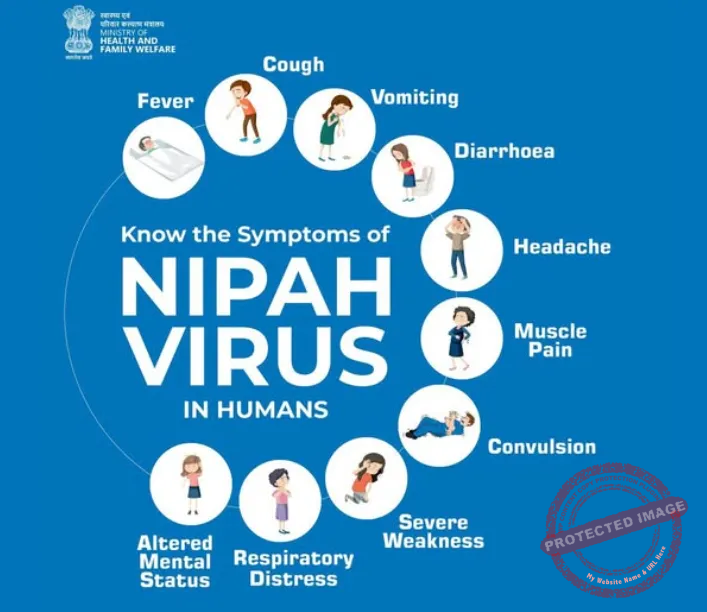
Nipah virus infection can cause fever, headache, confusion, cough and difficulty breathing. Other common symptoms include chills, fatigue, dizziness, vomiting and diarrhoea. Severe cases may lead to encephalitis or meningitis, WHO has noted.
Nipah was first identified in 1999 during an outbreak among pig farmers in Malaysia and Singapore. This is India’s ninth Nipah outbreak since 2001. Besides the current cases in West Bengal, Kerala has reported outbreaks almost annually since 2019, according to the UK Health Security Agency. Nearly annual outbreaks have also been recorded in Bangladesh also. Malaysia, the Philippines and Singapore have previously reported cases as well.
Key Nipah Virus Outbreaks in India Since 2001
India has recorded multiple Nipah virus outbreaks over the past 25 years, beginning with the first confirmed incident in West Bengal in 2001.
2001 – Siliguri, West Bengal
The first Nipah virus outbreak in India occurred between January and February 2001 in Siliguri, West Bengal. Owing to the district’s proximity to Bangladesh and initial challenges in identifying the pathogen, the virus was confirmed only after retrospective testing of patient samples. The outbreak was severe, resulting in 45 deaths among 66 confirmed cases—a fatality rate of almost 68 percent. The index patient was never identified, and investigations found that the spread was largely nosocomial, with no evidence linking the outbreak to animals.
2007 – Nadia, West Bengal
The second outbreak emerged in 2007 in the Nadia district. All five patients who tested positive for Nipah virus died within ten days, marking a fatality rate of 100 percent during this episode.
2018 – Kozhikode and Malappuram, Kerala
On May 19, 2018, Kerala reported its first-ever Nipah outbreak, also the first in South India. The virus spread across Kozhikode and Malappuram districts. Of the 18 confirmed cases, 17 people died. The outbreak was brought under control by May 30, 2018.
2019 – Kochi, Kerala
A fresh case was detected on June 4, 2019, when a 23-year-old student in Kochi tested positive. Over 300 contacts were placed under observation, but no additional infections were reported. The patient eventually recovered.
2021 – Kozhikode, Kerala
In 2021, a 12-year-old boy from Pazhur, Kozhikode, succumbed to Nipah virus infection. The outbreak—limited to a single fatality—was swiftly contained and declared over on September 5, 2021.
2023 – Kozhikode, Kerala
The Union Health Ministry later confirmed that two individuals who died in Kozhikode due to “unnatural fever” were infected with Nipah virus. Samples sent by the state health department to the ICMR-NIV, Pune, tested positive on the evening of September 12. Shortly after, laboratory reports confirmed four cases in total. Two of the infected individuals died, while two others were under treatment in Kozhikode at the time.