










Tiny grains of pollen, buried for thousands of years in soil and river sediments, are helping scientists tell a big story about India’s early farmers. A new study has shown how these microscopic traces can clearly distinguish between crops grown by humans and wild grasses, offering fresh insight into how agriculture began and spread across the fertile Ganga plains.
This question has long puzzled researchers. Crops such as wheat, rice, barley and millets—all staples of Indian farming today—belong to the grass family, Poaceae. Their pollen looks almost identical to that of wild grasses under a microscope. As a result, scientists studying ancient sediments often struggled to say when farming truly began, and when landscapes shifted from natural grasslands to cultivated fields.
Yet pollen is a powerful archive of the past. Preserved in layers of mud and silt, it can reveal which plants once grew in a region, whether forests were cleared, and how human settlement expanded—especially during the Holocene period, the last 11,700 years when agriculture reshaped ecosystems worldwide. The problem was finding a reliable way to separate crop pollen from wild grass pollen.
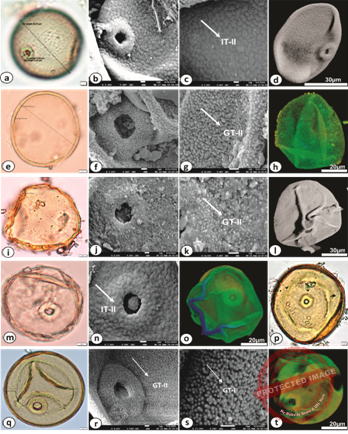
The breakthrough came from closely examining pollen micro-morphology. Researchers found that features such as the overall size of the pollen grain and the diameter of the annulus—the ring around its pore—hold the key. While such methods have been tried elsewhere, India lacked its own region-specific reference based on local crops and grasses. Scientists often had to rely on European pollen databases, which do not accurately reflect Indian biodiversity.
That gap has now been bridged. In a first-of-its-kind Indian study, scientists from the Birbal Sahni Institute of Palaeosciences (BSIP) and collaborating institutions analysed pollen from 22 cereal and non-cereal grass species. Using advanced microscopes, they established clear measurements that work specifically for Indian conditions, focusing on the Central Ganga Plain.
The choice of region was deliberate. Known as India’s food basket, the Central Ganga Plain has supported intensive farming and dense populations for millennia. It was an ideal setting to build a reliable tool for identifying ancient agriculture.
The findings, published in the journal The Holocene, identify a simple and practical rule. Pollen from most cereal crops is larger than 46 micrometres in diameter and has an annulus wider than 9 micrometres. Wild grasses consistently fall below these limits. Pearl millet is a known exception, with smaller pollen, but it has now been clearly accounted for.
This clear threshold gives scientists a dependable way to track when farming began, how it intensified, and how human activity transformed the landscape of the Ganga plains. Importantly, these reconstructions are now based on indigenous data rather than borrowed global references.
Led by Dr. Swati Tripathi of BSIP, Lucknow, and supported by researchers from the Botanical Survey of India, Indian Institute of Geomagnetism, and Lucknow University, the study brings together expertise from botany, geology, archaeology and environmental history.
The impact goes beyond academic interest. Archaeologists can now map the spread of early farming more accurately, while environmental historians can better understand how humans gradually reshaped forests and grasslands into one of the world’s most productive agricultural regions.
By decoding history from grains invisible to the naked eye, the study offers India its first precise scientific tool to trace the roots of agriculture and settlement. It shows how, step by step, humans learned not just to live on the fertile Ganga plains—but to farm them.