











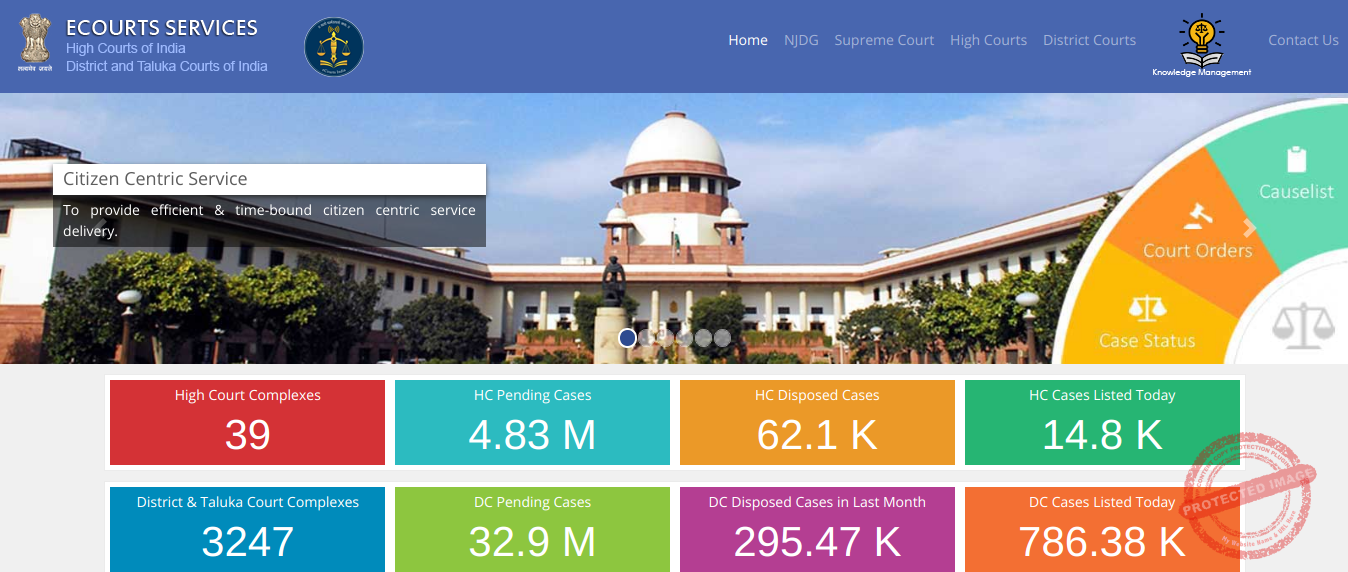
The eCourts Mission Mode Project, launched to improve access to justice through technology, has emerged as one of India’s most transformative judicial reforms. Implemented in three phases, the project has created a robust digital ecosystem for courts across the country, significantly enhancing efficiency, transparency, and accessibility.
Phase-I, launched in 2011 with an outlay of Rs 935 crore, focused on basic computerization of courts and establishing local network connectivity. Phase-II, initiated in 2015 with a budget of Rs 1,670 crore, expanded citizen-centric digital services, leading to the computerization of 18,735 District and Subordinate Courts.
On September 13, 2023, the Cabinet approved Phase-III with a budgetary outlay of Rs 7,210 crore for four years. This phase aims to create digital and paperless courts, digitize legacy and current case records, expand video conferencing facilities to courts, jails and hospitals, integrate AI and OCR tools, extend virtual courts beyond traffic offences, and achieve universal coverage of eSewa Kendras.
Over the years, eCourts has developed a comprehensive digital ecosystem covering the entire lifecycle of a case. The e-Filing portal enables lawyers and litigants to file cases online 24×7, eliminating the need for physical visits.
Integrated with the e-Payment system, users can now pay court fees and fines online under the jurisdiction of 24 High Courts. So far, 92.08 lakh cases have been filed electronically, and the system has processed 49.2 lakh transactions worth Rs 1,215.98 crore towards court fees and 4.86 lakh transactions worth Rs 61.97 crore towards fines.
Case management is fully digital through the upgraded Case Information System (CIS 4.0), which assigns a unique CNR number to each case for easy tracking. Litigants can access case status, cause lists, and judgments via the multilingual eCourts portal, SMS, email, Judicial Service Centres, kiosks, and the eCourts mobile app, which has 3.38 crore downloads. Courts issue 4 lakh SMS and 6 lakh emails daily, record 35 lakh daily hits on the portal, and have sent 14 crore SMS to litigants and advocates.
Integration with the Interoperable Criminal Justice System (ICJS) ensures seamless data exchange with police (CCTNS), e-Prison, and e-Forensic platforms, making criminal justice more efficient. The National Service and Tracking of Electronic Processes (NSTEP), operational in 28 States/UTs, has generated 6.21 crore e-processes, with 1.61 crore successfully delivered.
Virtual and hybrid hearings have become the norm, with 3.91 crore virtual hearings conducted since the COVID-19 lockdown, positioning India as a global leader. Live streaming is now available in 11 High Courts and the Supreme Court’s Constitutional Benches. Also, 29 virtual courts in 21 States/UTs have adjudicated 8.9 crore traffic cases, collecting Rs 895 crore in fines, while the Delhi High Court has set up 34 Digital Courts for cheque bounce cases.
Digitization efforts are massive, covering 579 crore pages of judicial records across High Courts and District Courts. Digital Courts 2.1 allows judges to access pleadings and evidence entirely online, supported by the JustIS app for case management.
The National Judicial Data Grid (NJDG) hosts 34.23 crore orders and judgments, while a dedicated portal offers 1.69 crore searchable judgments. AI-based tools, analytics, and OCR are being integrated for advanced case analysis and decision support.
Citizen access has been strengthened through 1,987 eSewa Kendras, bridging the digital divide. Network infrastructure now covers 99.5% of court complexes, with WAN connectivity and cloud hosting on NIC platforms. Solar power systems have been installed in 1,471 court complexes to ensure uninterrupted ICT operations.
The capacity building has remained a priority, with the e-Committee of the Supreme Court conducting 910 training programs, training 3.22 lakh stakeholders, including judges, staff, and advocates, with specialised modules for visually challenged officers and cyber security.
The eCourts project has also earned National Awards for e-Governance for three consecutive years, marking its journey from basic computerization in 2011 to a citizen-centric, technology-driven justice delivery system in Phase-III. It stands as a transformative initiative, enhancing efficiency, transparency, and accessibility across India’s judicial landscape.