









This year, April 15 began for Rajasthanis like any other morning, until the state government woke up and looked suspiciously at Bablu. And Chhotu. And Tinku. And Kalu. And Shaitaan. Names that have survived playgrounds, punchlines and parent-teacher meetings for generations now stand accused of being “negative”, “flawed” and — worst of all — bad for personal growth.
The logic is sincere, if slightly alarming. These names, the thinking goes, expose children to mockery, chip away at confidence and leave emotional dents that last longer than school report cards. So if your name is Bablu or Chhotu, please understand: this is not about you as a person. It’s about your developmental journey, which apparently went off track the moment your parents filled out the birth form.
Determined not to let another child suffer the trauma of being called “Chhotu” in a childhood game, Rajasthan has entered the baby-naming business. Parents will still get to name their children — democracy remains intact — but the state will hover nearby, clearing its throat politely. No blunt bans, no rejected certificates. Instead, schoolteachers will gently persuade families to reconsider their life choices, in a process that feels familiar to anyone who has ever been told an optional service is actually compulsory.
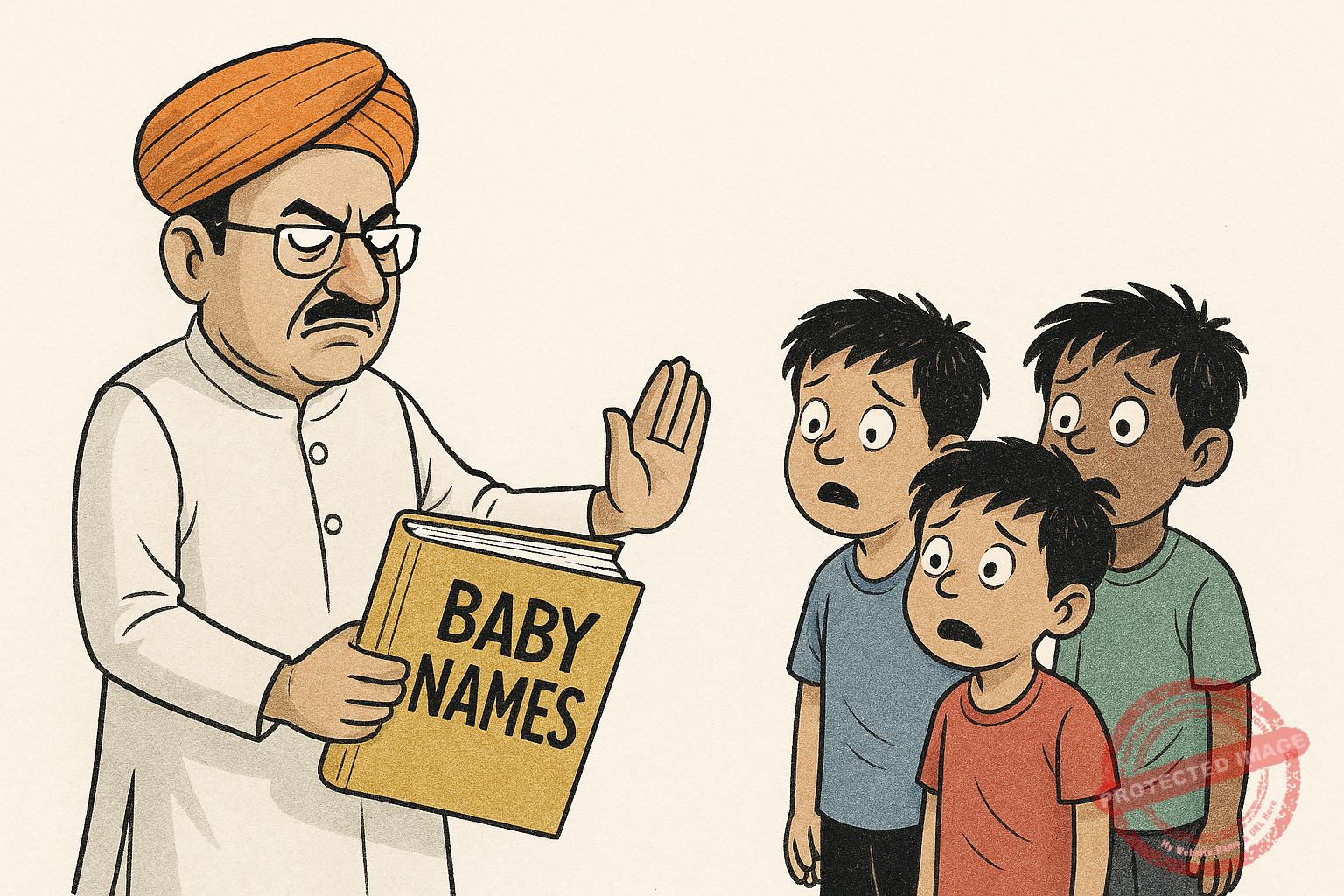
This exercise, officially titled the Sarthak Naam Abhiyan, is described as voluntary, which is comforting in the same way speed-limit signboards are. The goal is to replace names deemed inappropriate, derogatory or meaningless with something more respectable — and preferably listed in the government’s handy catalogue of acceptable options.
That catalogue, incidentally, is impressively stocked. Parents may choose from 1,409 approved names for boys and 1,541 for girls, all certified sanskari. Open the book anywhere and salvation awaits. Naming a child is no longer an emotional moment inspired by grandparents, gods or gut instinct — it is now an exercise in correct ticking.
Supporters insist this is standard global practice. After all, countries like Germany don’t allow offensive names. Fair point. But it does raise a small question: who decides what is offensive? Is “Chhotu” automatically an insult? Would Haryana like a word, given that Sir Chhotu Ram remains one of its most respected leaders? And should Rajasthan quietly apologise to history for producing Major Shaitan Singh, PVC, a name the state now seems oddly uncomfortable with?
Critics suggest the government may be overreaching. Schools still struggle with learning outcomes, infrastructure and teacher shortages — problems that stubbornly refuse to solve themselves with better naming conventions. If names really are the concern, there is an easier fix: allow adults to change theirs, quickly and painlessly, if they wish. Voluntarily. Truly so.
Until then, Bablu and Chhotu will continue to exist — etched into commentary boxes, memory lanes and common speech. They may be absent from future attendance registers, but they are unlikely to be erased by circulars. Some names, like some childhoods, survive despite official improvement schemes.