










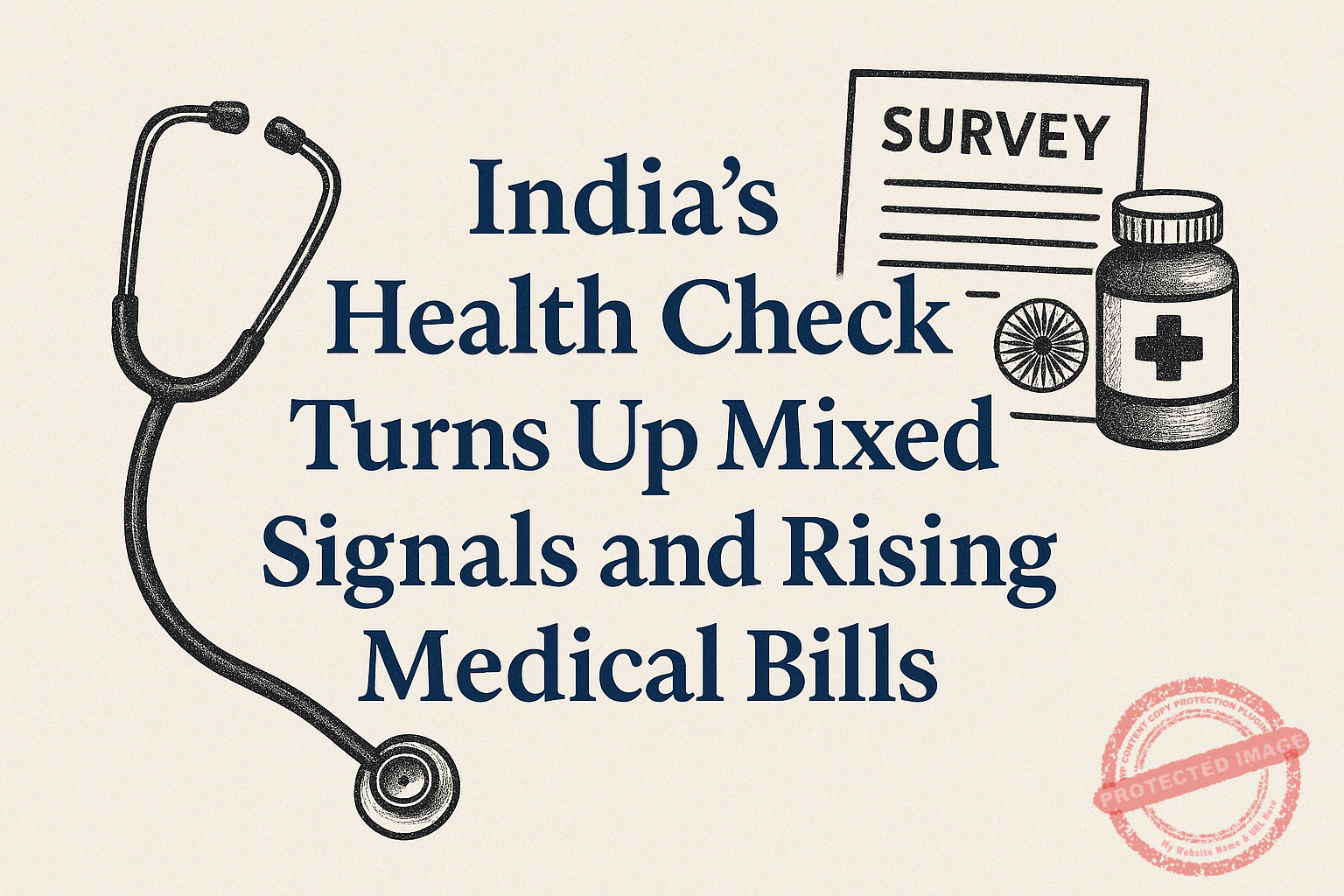
Nearly one in seven Indians reported being ill in a short span, hospital care remains more common in cities, and health insurance coverage has jumped sharply—these are some of the key findings from the latest national health survey released by the Ministry of Statistics and Programme Implementation.
The findings come from the report Household Social Consumption: Health, based on the 80th round of the National Sample Survey conducted between January and December 2025. The survey offers a detailed picture of illness patterns, healthcare use, childbirth practices and medical spending across the country, drawing on decades of India’s long-running health data tradition that began in the 1950s.
According to the survey, 13.1% of Indians reported having an ailment in the 15 days preceding the survey. Urban residents were slightly more likely to report illness than their rural counterparts. The burden of illness rose sharply with age, peaking among people aged 60 years and above, nearly 44% of whom reported being unwell. Middle-aged adults and young children followed, underlining the twin challenges of ageing and early-life health risks.
The nature of illness also varied by age. Infections and respiratory problems dominated childhood and teenage years, while stomach-related and psychiatric or neurological conditions were more common among young adults. After the age of 30, non-communicable diseases such as hypertension and diabetes emerged as the most frequently reported ailments, highlighting the growing impact of lifestyle-related conditions.
Hospitalisation remained relatively limited, with about three hospital stays reported per 100 persons in a year, though urban residents were hospitalised more often than those in rural areas. Childbirth care, however, showed near-universal institutional coverage. More than 96% of deliveries took place in hospitals, with home births becoming increasingly rare in both rural and urban India. Access to antenatal and postnatal care was also widespread, reflecting steady improvements in maternal health services.
One of the most striking shifts over recent years has been in health insurance coverage. Between 2017–18 and 2025, coverage more than tripled in rural areas and more than doubled in urban areas, bringing nearly half of India’s population under some form of health insurance.
Yet, out-of-pocket spending continues to be a concern. The average medical cost per hospitalisation, excluding childbirth, stood at over ₹34,000, with urban patients spending significantly more than rural ones. Public hospitals offered far greater financial protection, with average hospital costs and outpatient expenses remaining a fraction of those incurred in private facilities. For many, treatment in public hospitals was free or involved only minimal spending.
Overall, the survey paints a picture of expanding access and coverage, alongside persistent inequalities and financial pressures—an evolving health landscape that mirrors India’s demographic and economic transition.