

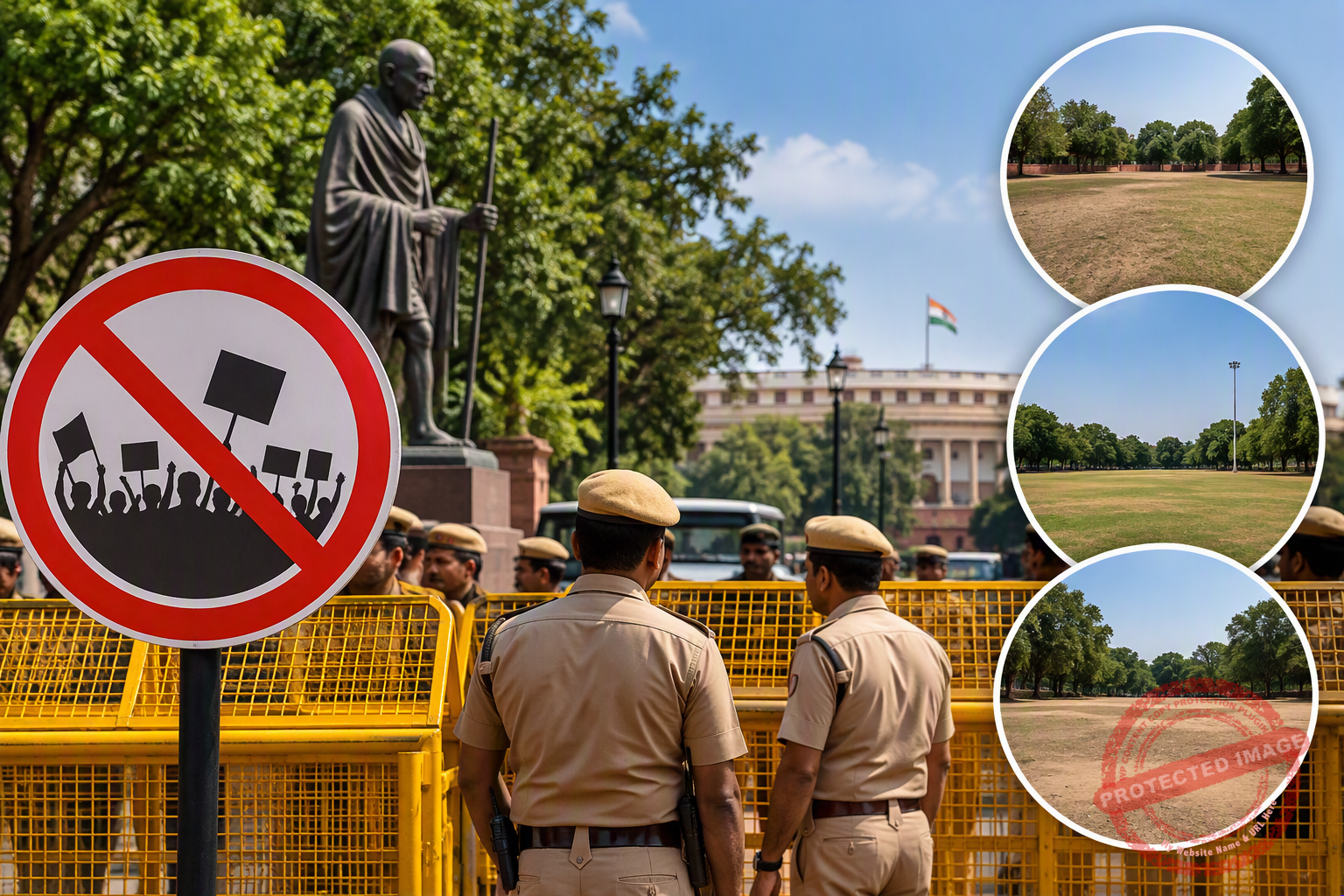

The Delhi Police has issued a revised order that will bring an end to protests and sit-ins at Jantar Mantar, one of the capital’s most prominent demonstration sites. Under the new arrangement, political parties, organizations, and social groups will no longer be allowed to hold agitations at the venue.
The decision comes amid growing concerns over the disruption caused by frequent protests in Central Delhi. Traffic diversions, barricading, metro restrictions, and security measures have often inconvenienced commuters and local residents. Trade bodies had also urged authorities to shift demonstrations away from major commercial areas to prevent disruption to business activities.
According to police officials, maintaining security in New Delhi’s high-security zone, which houses Parliament, Rashtrapati Bhavan, and the Prime Minister’s residence, had become increasingly challenging. Jantar Mantar is located close to Parliament, and authorities cited past incidents in which demonstrators allegedly attempted to breach security barriers and march toward sensitive government installations.
The issue gained attention after large-scale protests in the capital prompted concerns about public inconvenience and security management. During hearings on the matter, the Supreme Court directed the Center to review the suitability of Jantar Mantar as a protest venue while ensuring a balance between citizens’ democratic right to protest and the public’s right to free movement and normal civic life.
Following the court’s observations, the Ministry of Home Affairs constituted a committee to examine the issue. After reviewing security, traffic, and public convenience concerns over nearly two months, the committee recommended a new framework for organizing demonstrations in Delhi. Based on these recommendations, the Police Commissioner issued a standing order designating alternative locations for protests and rallies.
Under the new policy, three designated grounds will serve as the primary venues for demonstrations in the capital. The order does not specify an expiry date, indicating that it will remain in force until modified or replaced. As a result, Jantar Mantar will no longer function as an authorized site for protests, marking a significant shift in Delhi’s protest management policy.