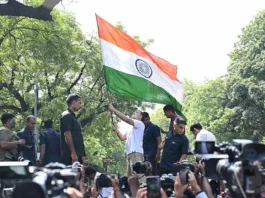
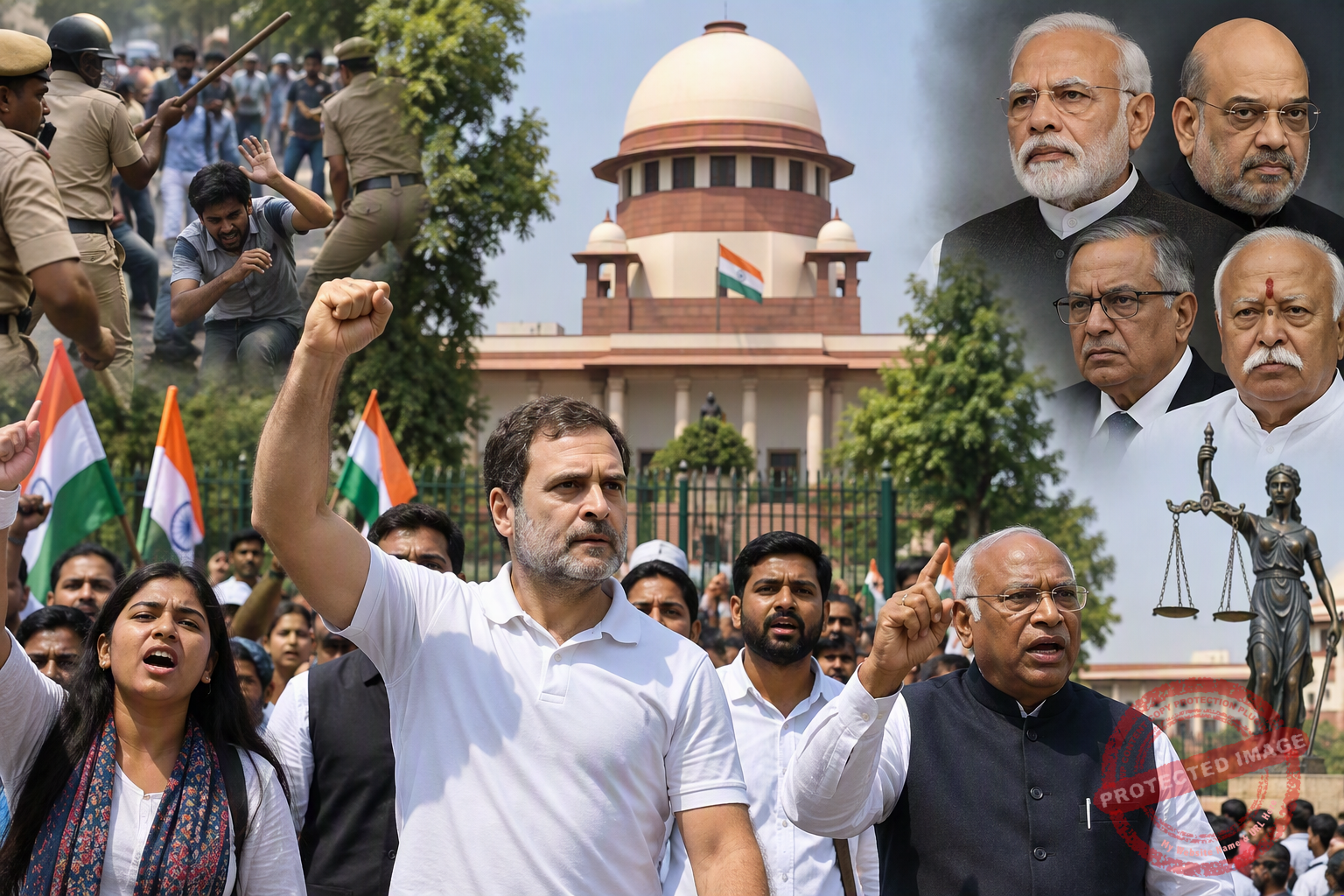
In a post on social media platform X, Gandhi said the march would be carried out in a spirit of unity, patriotism, and brotherhood. He alleged that young people who participated in a peaceful protest in Delhi on Saturday were attacked by police and BJP workers. “This is not the India we want,” he said, urging people not to be afraid.
Gandhi said the march would bring together people from different political parties, communities, castes, genders, and states. According to him, all those who believe in democracy and support the Constitution will participate in the protest.
The Congress MP also accused Prime Minister Narendra Modi, Union Home Minister Amit Shah, National Security Advisor Ajit Doval, and RSS chief Mohan Bhagwat of trying to silence public voices, asserting that they would not succeed in suppressing democratic dissent.
Meanwhile, speaking in Bengaluru, Congress president Mallikarjun Kharge alleged that the country was facing a situation similar to an “undeclared Emergency.” He claimed the government was using police action to suppress protests and silence the voices of young people.
However, the proposed march has drawn criticism from some legal experts. Former Supreme Court Bar Association (SCBA) president and senior advocate Adish C. Aggarwala appealed to Rahul Gandhi to cancel the march, arguing that it could place political pressure on the judiciary.
Aggarwala said the Chief Justice of India, in an administrative capacity, has no authority to direct the Chief Election Commissioner to resign or remove him from office. He maintained that any challenge to the Election Commission’s actions should be pursued through legal proceedings before the appropriate court bench rather than through a political memorandum addressed to the CJI.
He also urged opposition parties to keep the office of the Chief Justice above political controversies and preserve the independence of the judiciary.